Veer Savarkar’s Contribution to India

Veer Savarkar’s Contribution to India and Why 2 October Matters to Every Indian
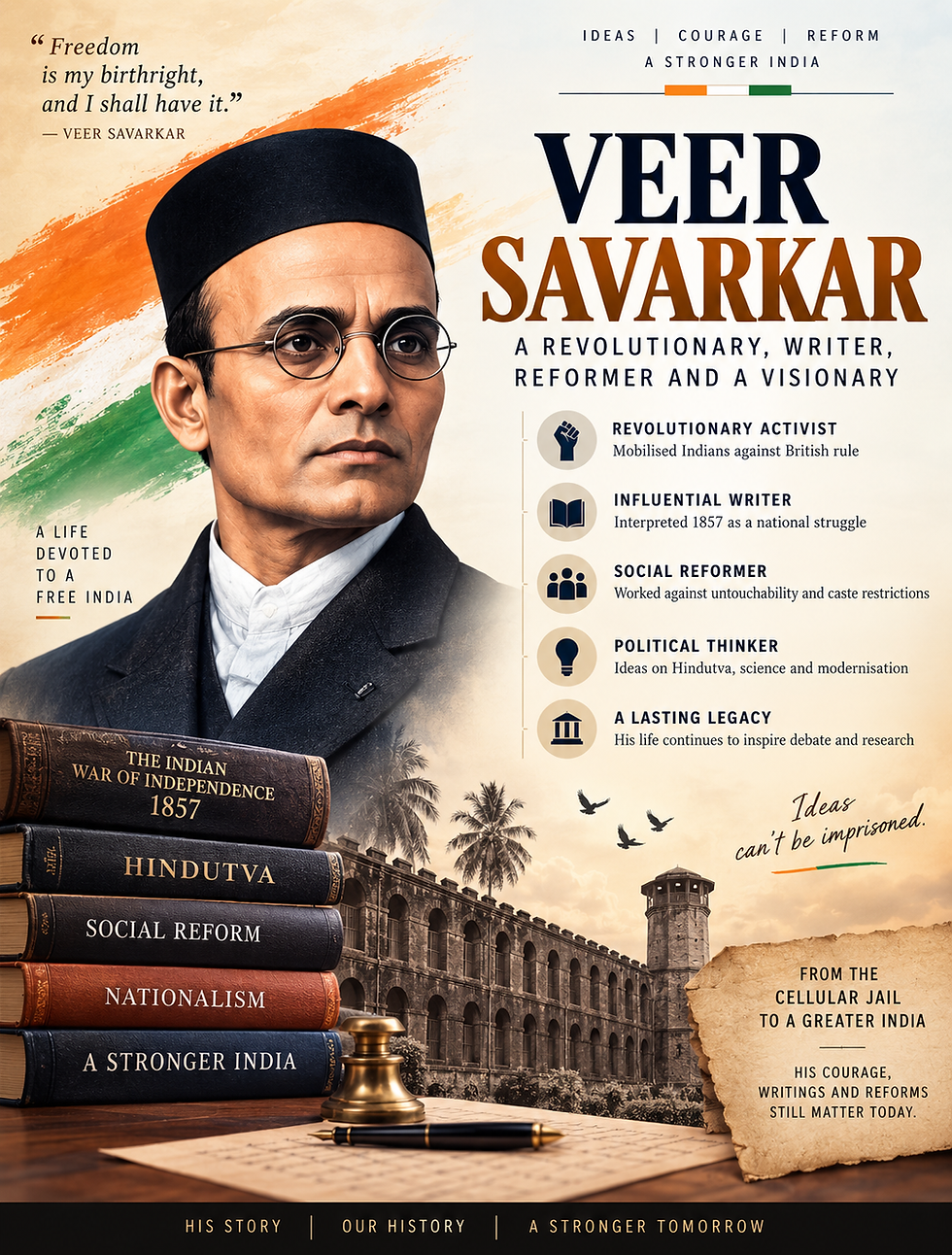
India’s history was shaped by people who followed different political philosophies, methods of resistance and visions for the country. Among the most discussed figures of the independence era is Vinayak Damodar Savarkar, popularly known as Veer Savarkar.
Revolutionary activist, writer, political thinker and social reformer, Savarkar remains both influential and contested in modern discussions of Indian history. Understanding his life therefore requires looking at his documented activities, writings and political ideas rather than reducing his legacy either to praise or criticism.
At the same time, 2 October has several important associations for Indians, including the birth anniversary of former Prime Minister Lal Bahadur Shastri, the International Day of Non-Violence and the anniversary of the launch of the Swachh Bharat Mission.
Who Was Veer Savarkar?
Vinayak Damodar Savarkar was born on 28 May 1883 at Bhagur near Nashik in Maharashtra.
He became involved in revolutionary nationalism while still a young man. Government historical material records that in 1904 he founded Abhinav Bharat, an organisation committed to ending British colonial rule. He subsequently travelled to London, where his political activities became associated with the revolutionary Indian nationalist community there.
Savarkar eventually faced prosecution by the British authorities and received two transportation-for-life sentences. He was imprisoned in the Cellular Jail in the Andaman Islands, an institution closely associated with the incarceration of Indian political prisoners.
But his historical importance extends beyond his imprisonment.
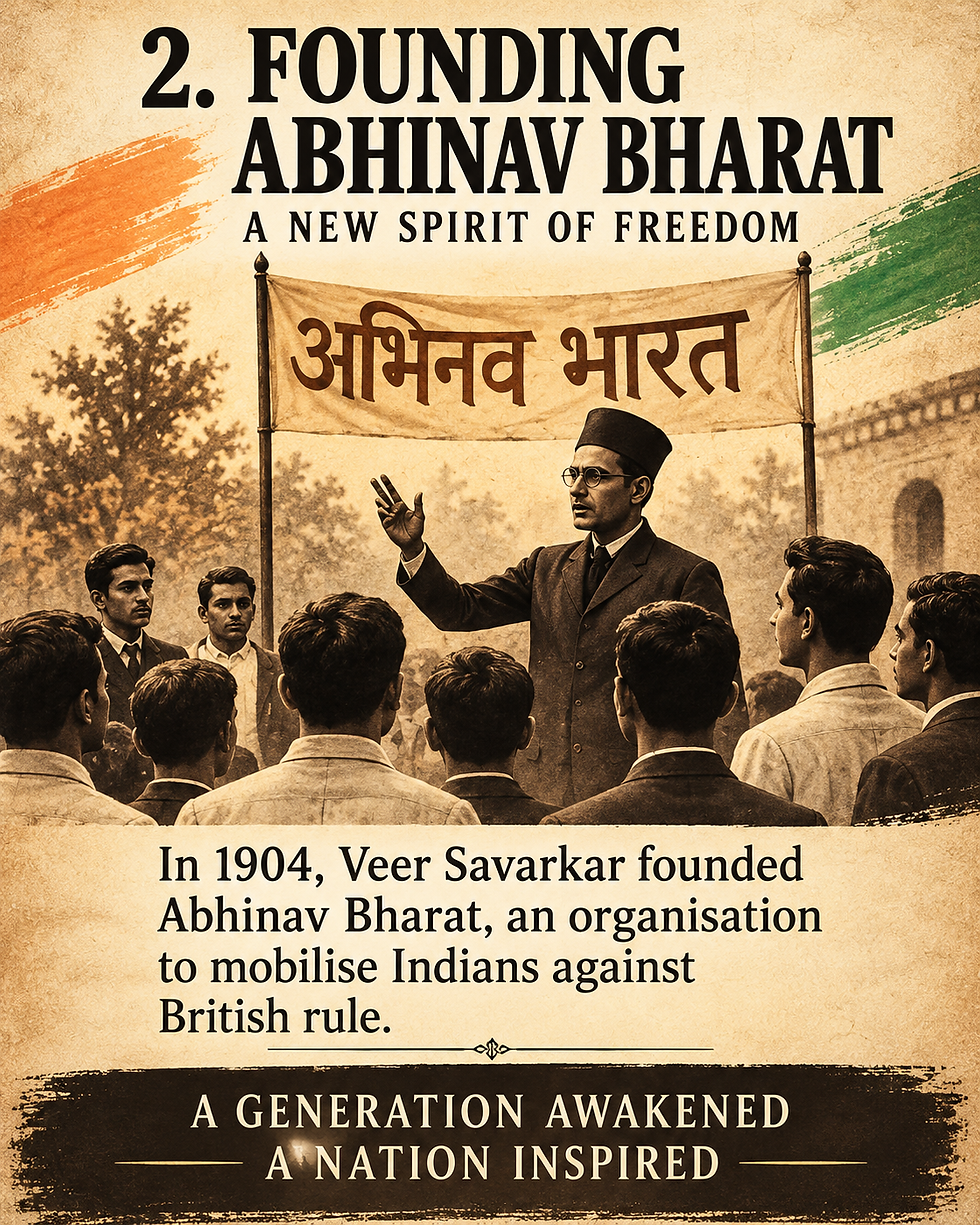
1. Abhinav Bharat and Revolutionary Nationalism
One of Savarkar’s early contributions to the independence movement was the creation of Abhinav Bharat.
Founded in 1904, the organisation sought to mobilise Indians against British colonial rule and was associated with revolutionary methods rather than the constitutional politics pursued by some other nationalist leaders of the period.
His activities illustrate an important historical fact: the Indian independence movement contained multiple ideological and strategic traditions.
Studying Savarkar therefore provides insight into the revolutionary strand of Indian nationalism during the early twentieth century.
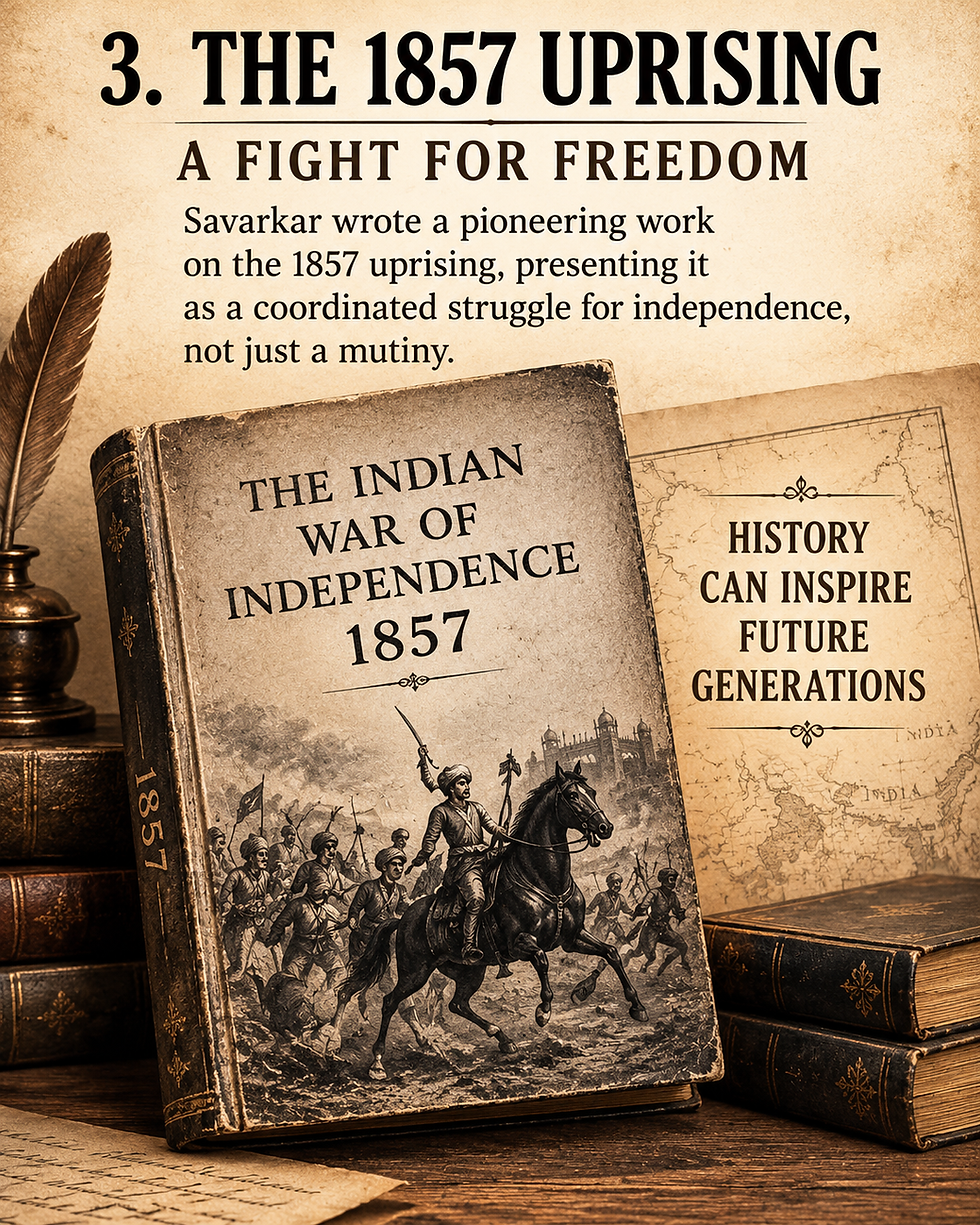
2. His Interpretation of the Uprising of 1857
Savarkar also became known for his interpretation of the 1857 uprising.
While in London, he researched and wrote a work portraying the events of 1857 as a coordinated struggle for Indian independence rather than simply a military mutiny.
Government historical sources record his work on the subject and his efforts to commemorate the fiftieth anniversary of the uprising while associated with India House in London.
His interpretation became influential in nationalist understandings of 1857.
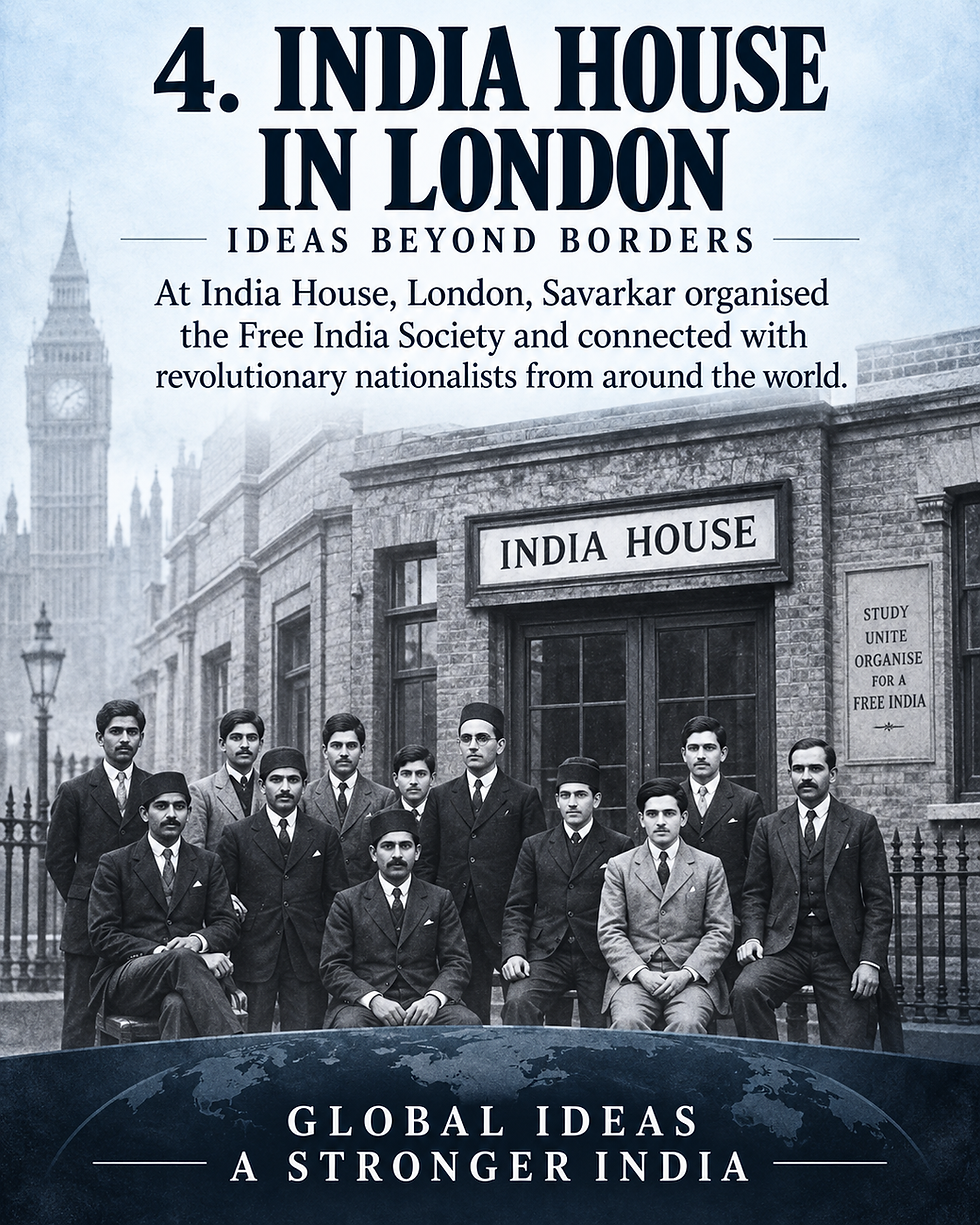
3. Savarkar at India House in London
London became an important chapter in Savarkar’s political life.
While studying law, he became involved with India House, which served as an important centre for Indian nationalist and revolutionary activity in Britain.
Savarkar also organised the Free India Society and used political discussion, historical writing and organisation to promote opposition to colonial rule.
His activities eventually attracted the attention of British authorities.
He was arrested in London in 1910. During his transfer to India, Savarkar made his famous escape attempt at Marseilles, France, jumping from the ship and reaching French territory before being recaptured.
The episode subsequently became an international legal matter.
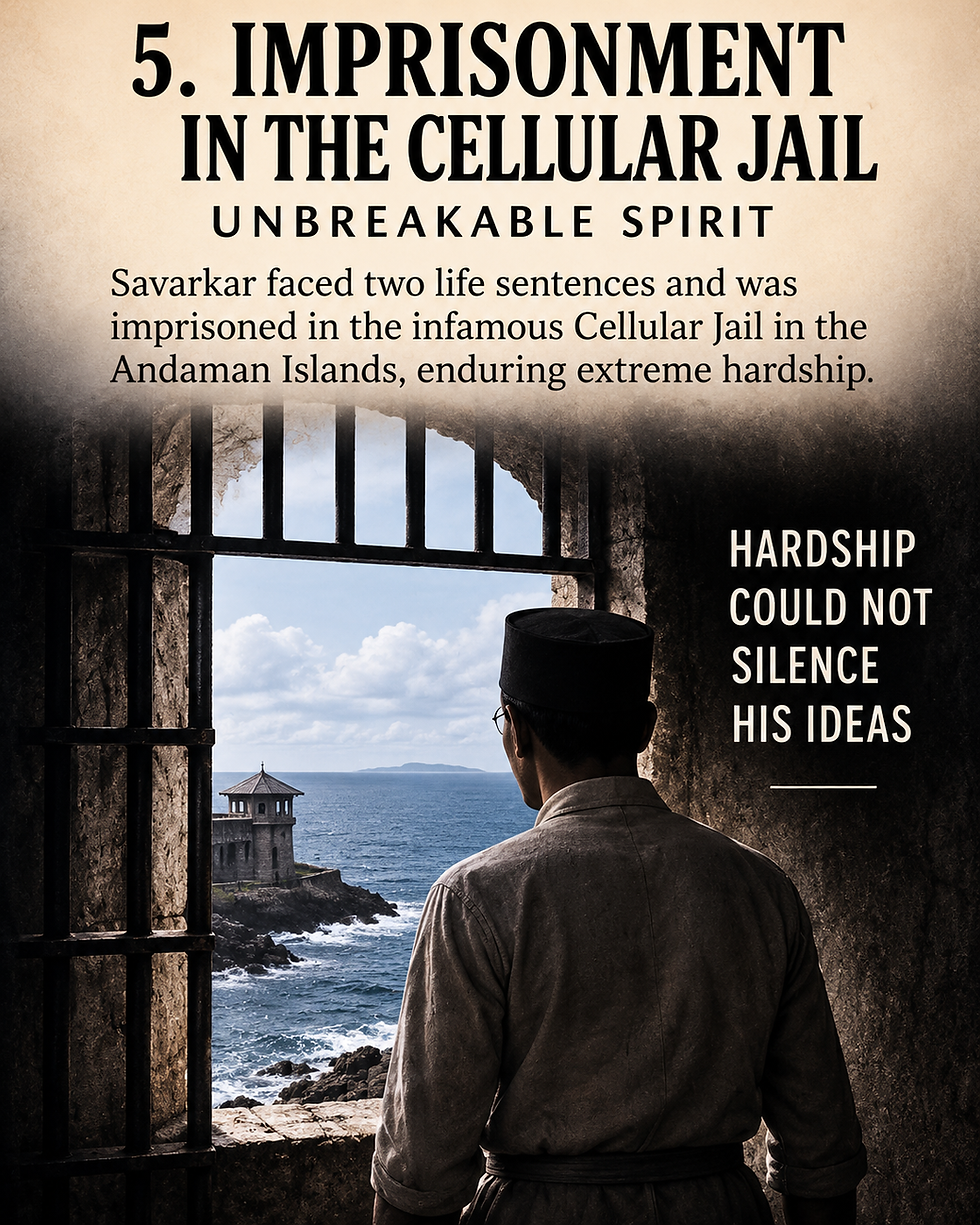
4. Imprisonment in the Cellular Jail
Savarkar's imprisonment remains one of the best-known episodes of his life.
Following his prosecution, he was sentenced to transportation and incarcerated in the Cellular Jail in the Andaman Islands.
Government historical material describes the rigorous imprisonment and hard labour imposed on him there.
The Cellular Jail itself remains an important memorial to Indians imprisoned by the colonial administration.
Savarkar’s petitions to the colonial authorities during his imprisonment have also become a subject of historical and political debate. Interpretations differ sharply over their motivation and significance, which is why they are best examined through primary documents and serious historical scholarship rather than partisan summaries.
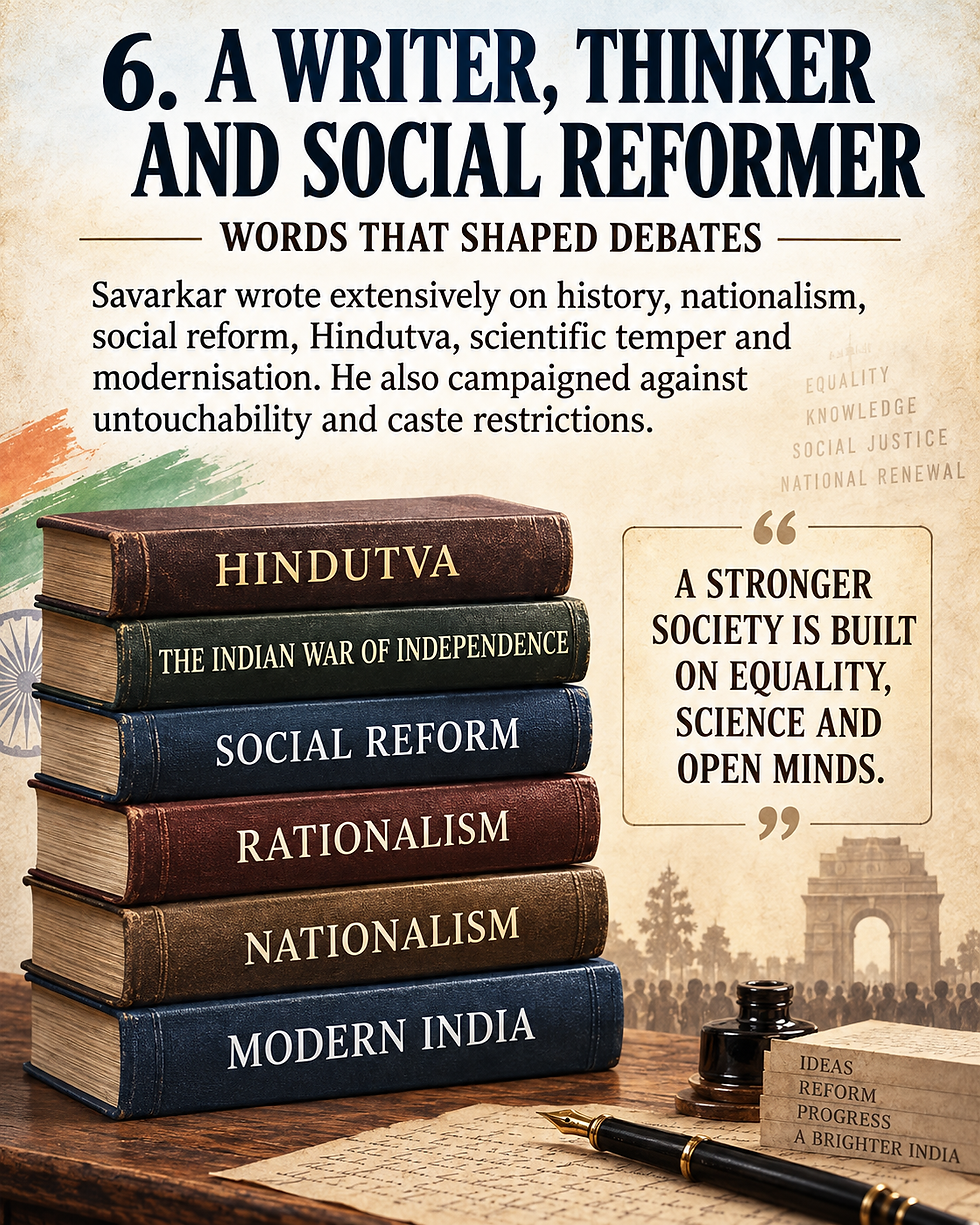
5. Savarkar as a Writer and Political Thinker
Savarkar was not only a revolutionary activist. He produced political, historical and literary writings throughout his life.
His works addressed subjects including:
Indian history
Nationalism
Political organisation
Social reform
Hindu identity
Rationalism
Science and modernisation
His formulation of Hindutva became particularly influential in twentieth-century Hindu nationalist political thought.
It is important to distinguish Hindutva as Savarkar's political and cultural formulation from the broader and much older religious traditions collectively associated with Hinduism. His ideas have subsequently been interpreted, supported and criticised in different ways by scholars and political movements.
Understanding that distinction helps readers approach his political thought historically rather than through contemporary slogans alone.
6. Campaign Against Untouchability and Caste Restrictions
One part of Savarkar’s public activity that deserves attention is his involvement in social reform.
During his years in Ratnagiri, he advocated measures aimed at weakening caste barriers and untouchability.
The Press Information Bureau records his association with the Patit Pavan Mandir in Ratnagiri, which was intended to permit temple access irrespective of caste. Government accounts also highlight his opposition to restrictions involving caste-based occupations, inter-caste dining and inter-caste marriage.
These activities form an important part of the historical assessment of Savarkar alongside his political ideology.
7. Scientific Temper and Modernisation
Savarkar also argued for greater emphasis on science, modern thinking and industrialisation.
A Government of India account of his social ideas records his advocacy of scientific temper and his view that modernisation and industrial development were important to India's future.
This aspect of his thought is particularly interesting because it demonstrates that his writings were not restricted to political independence.
They also dealt with questions concerning the kind of society and state India should become.
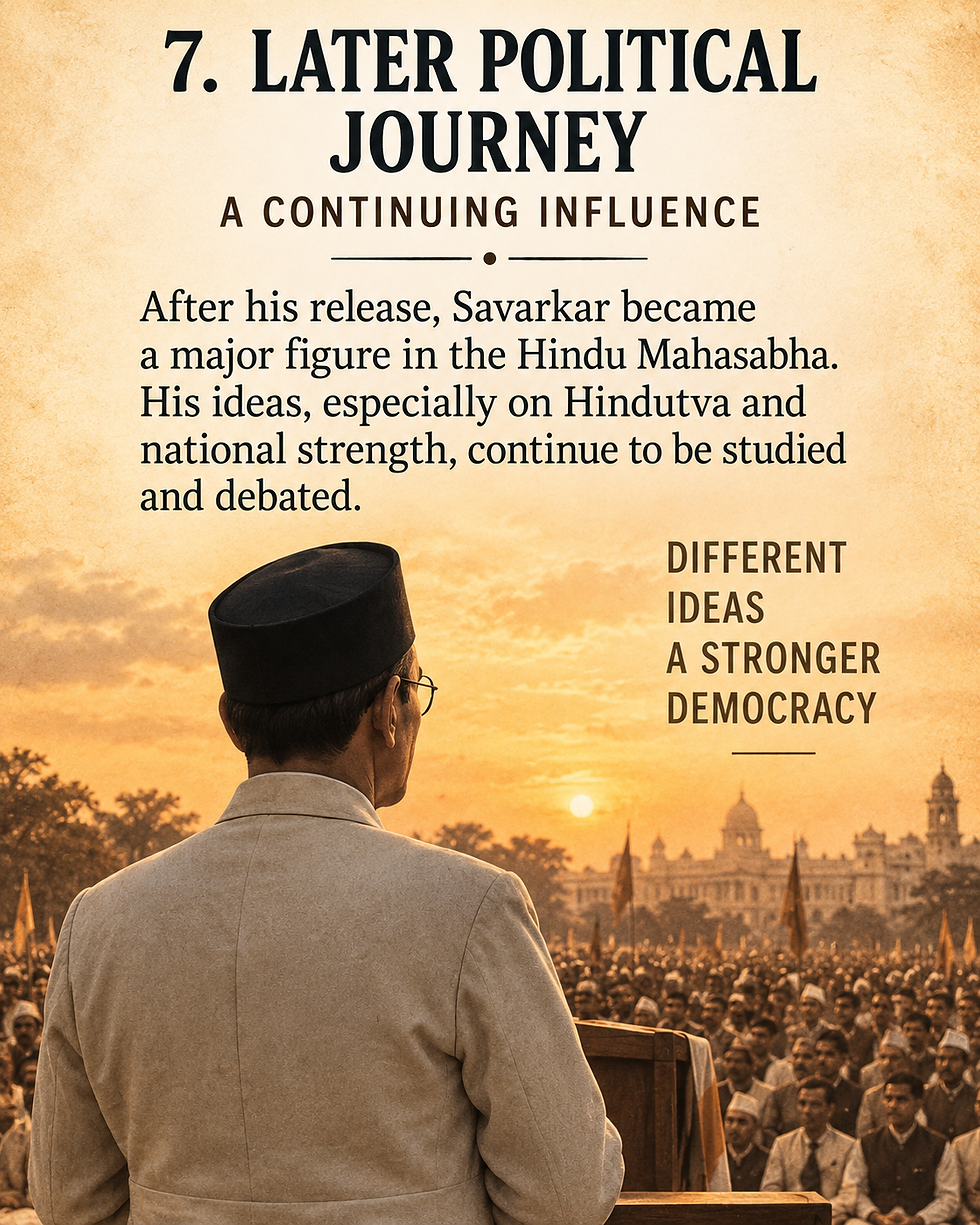
8. Savarkar's Later Political Career
After restrictions on his political activity were lifted, Savarkar became a major figure in the Hindu Mahasabha and served as its president for several years.
His political philosophy during this period remains the subject of substantial historical debate.
Supporters emphasize his nationalism, revolutionary past, social reform and arguments for national strength. Critics focus on aspects of his Hindutva ideology, communal politics and later political positions.
A serious historical account should acknowledge both the documented contributions and the controversies rather than presenting a one-dimensional portrait.
Why Is 2 October Important for Indians?
2 October carries several layers of historical, national and international significance.
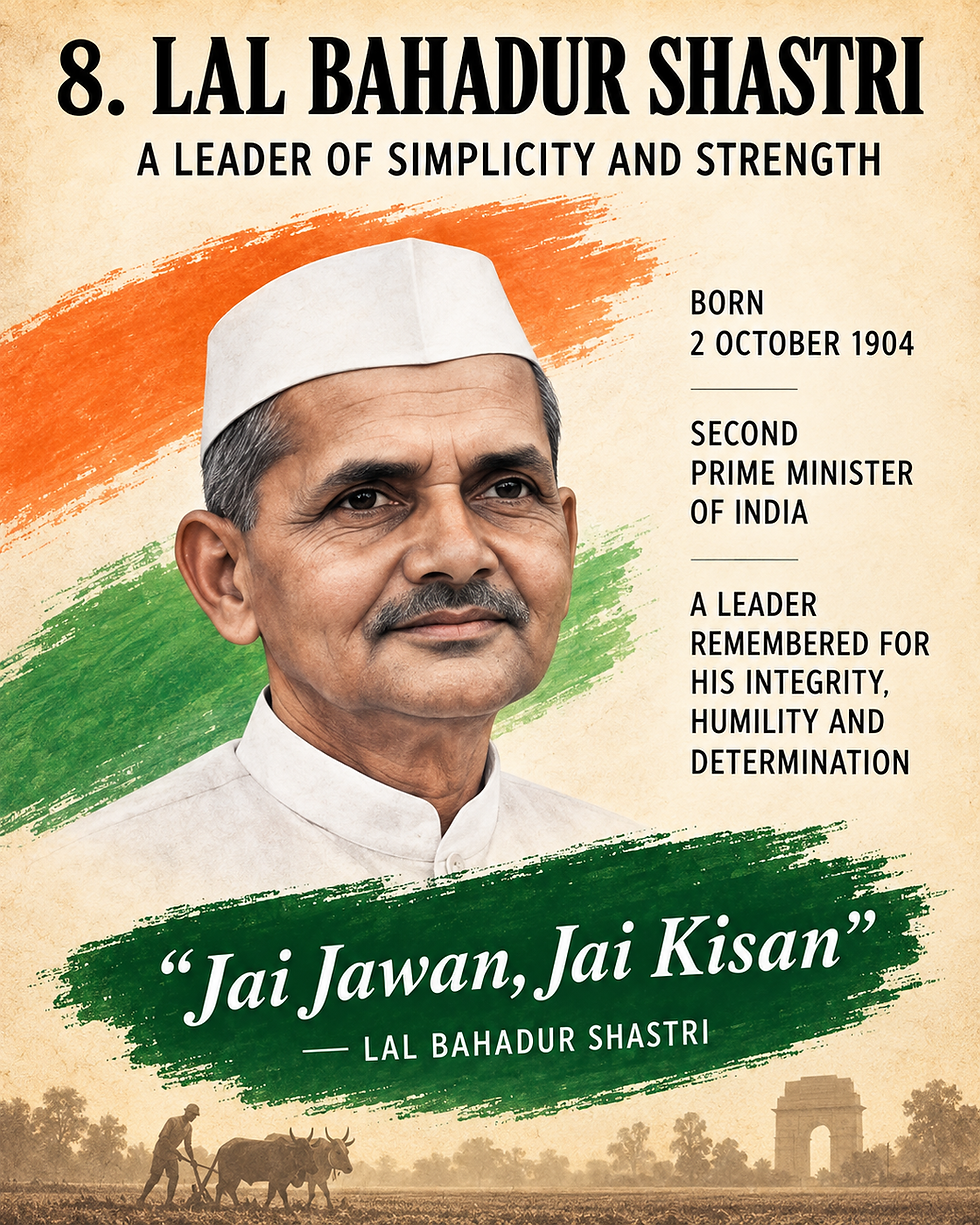
Lal Bahadur Shastri Was Born on 2 October 1904
One of the most important reasons Indians remember 2 October is the birth anniversary of Lal Bahadur Shastri, India's second Prime Minister.
According to the Prime Minister of India's official biography, Shastri was born on 2 October 1904 in Mughalsarai, Uttar Pradesh.
He served as Prime Minister from 9 June 1964 until 11 January 1966.
Shastri became closely associated with the slogan:
“Jai Jawan, Jai Kisan”
The phrase encapsulated the importance of two pillars of national life: those responsible for the country's defence and those responsible for its food production.
On 2 October 2026, Prime Minister Narendra Modi officially paid homage to Shastri, highlighting his simplicity, dedication to the nation and determination.
For younger Indians, Shastri's life offers an opportunity to study leadership during a particularly challenging period of India's post-independence history.

2 October Is the International Day of Non-Violence
The United Nations observes 2 October as the International Day of Non-Violence.
The UN General Assembly established the observance in 2007 as an occasion to promote non-violence through education and public awareness and to encourage a culture of peace, tolerance and understanding.
That gives 2 October a significance extending beyond India.
It can be used as an occasion to discuss:
Peace over hatred.Dialogue over hostility.Tolerance over intolerance.Understanding over division.Constitutional and democratic engagement over violence.
These principles remain relevant in societies navigating political disagreement, religious differences, social-media polarisation and international conflict.
Swachh Bharat Mission Was Launched on 2 October 2014
There is another important contemporary connection.
The Government of India formally launched the Swachh Bharat Mission on 2 October 2014 as a nationwide cleanliness and sanitation movement.
This gives the date a practical civic dimension.
Cleanliness is not simply the responsibility of municipal authorities.
Citizens influence the cleanliness of:
homes
streets
neighbourhoods
workplaces
schools
public transport
markets
tourist destinations
rivers and other public spaces
The larger lesson is straightforward: national development depends not only on government programmes but also on everyday civic behaviour.
What Can Indians Reflect on Every 2 October?
Rather than treating 2 October simply as another date on the calendar, it can serve as an annual opportunity for reflection.
We can ask ourselves:
Are we contributing positively to our country?
Are we respecting people with whom we disagree?
Are we keeping our surroundings clean?
Are we strengthening social harmony rather than spreading hostility?
Are we recognising the contribution of soldiers, farmers, workers, teachers, scientists and other citizens?
Are we studying Indian history deeply enough to understand its complexity rather than reducing historical figures to social-media slogans?
These questions make historical remembrance relevant to the present.
Savarkar, Shastri and the Importance of Studying India's Many Historical Traditions
India's history cannot be understood through a single individual, ideology or method.
Savarkar's revolutionary nationalism represents one strand of India's twentieth-century political history. Lal Bahadur Shastri represents another chapter, associated with public service and leadership in independent India.
India's history also contains constitutionalists, revolutionaries, social reformers, soldiers, farmers, scientists, writers, administrators and millions of ordinary citizens whose contributions helped shape the country.
Studying these different traditions does not require erasing their disagreements.
On the contrary, understanding where historical figures agreed, differed and evolved produces a more mature understanding of India's past.
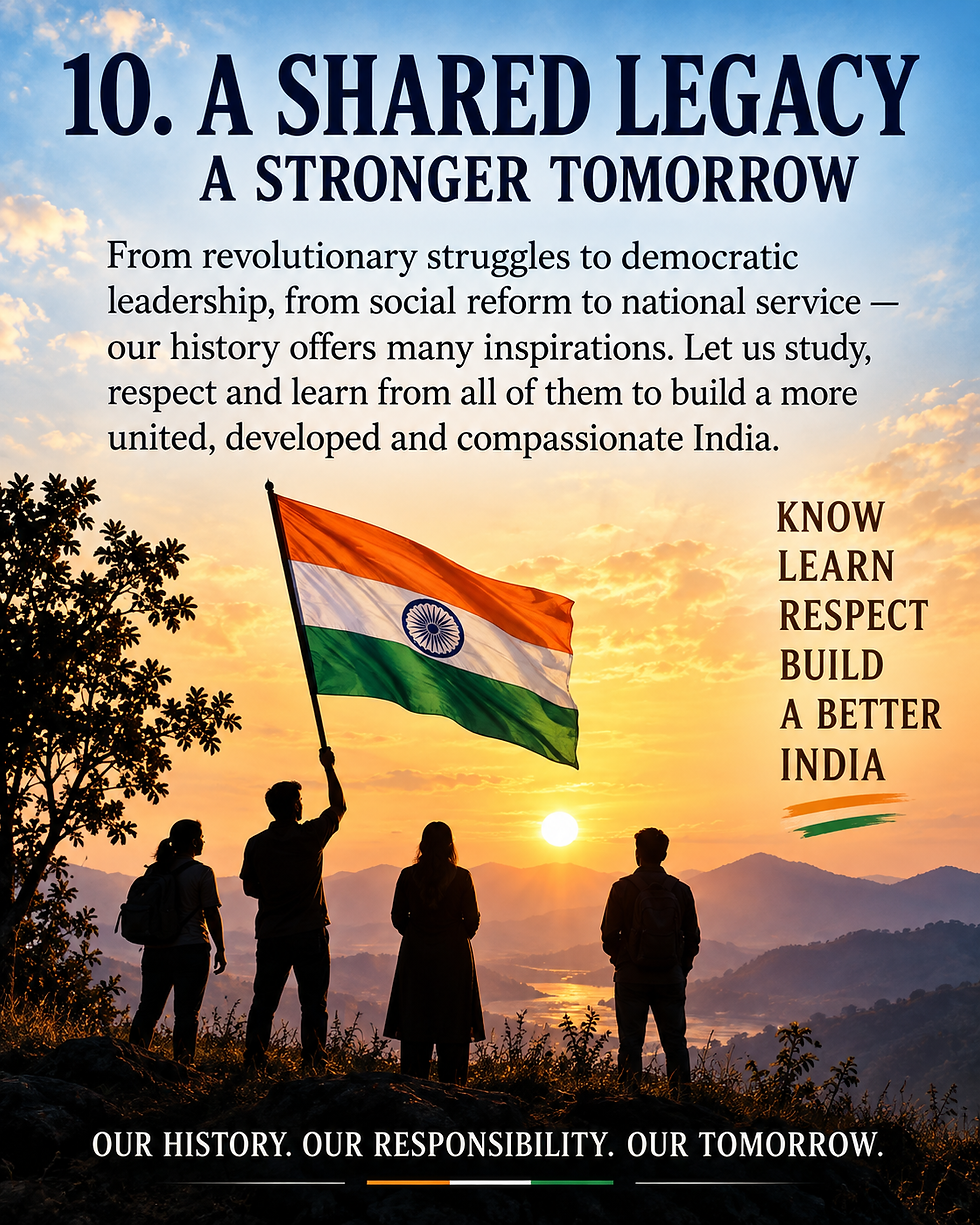
Conclusion: Remember History, Practise Civic Responsibility
Veer Savarkar's historical legacy encompasses revolutionary activity against colonial rule, imprisonment in the Cellular Jail, influential writings, social-reform initiatives, advocacy of scientific modernisation and the development of a political conception of Hindutva. Some aspects of his legacy remain politically and academically contested, making careful use of primary sources and credible scholarship especially important.
Meanwhile, 2 October has multiple important associations for Indians.
It marks the birth anniversary of Lal Bahadur Shastri, is observed internationally as the International Day of Non-Violence, and is the anniversary of the 2014 launch of the Swachh Bharat Mission.
Together, these associations provide an opportunity to reflect on national service, peace, cleanliness, responsibility, social reform and India's complex historical journey.
History becomes most valuable when we do more than remember it.
We study it, question it, learn from it and use that knowledge to become more responsible citizens.
Frequently Asked Questions
Who was Veer Savarkar?
Vinayak Damodar Savarkar was an Indian revolutionary activist, writer, political thinker and later Hindu Mahasabha leader. He was born on 28 May 1883 and died on 26 February 1966.
What did Veer Savarkar do for India?
His documented activities included founding Abhinav Bharat, participating in revolutionary nationalist networks, writing about the 1857 uprising, enduring imprisonment under British rule, campaigning against aspects of caste discrimination and producing influential political and literary writings.
Why was Savarkar sent to Cellular Jail?
British authorities prosecuted Savarkar in connection with revolutionary activities. He received transportation-for-life sentences and was imprisoned in the Cellular Jail in the Andaman Islands.
Why is 2 October important in India?
Among its important associations, 2 October is Lal Bahadur Shastri's birth anniversary, the International Day of Non-Violence, and the anniversary of the launch of the Swachh Bharat Mission in 2014.
When was Lal Bahadur Shastri born?
Lal Bahadur Shastri was born on 2 October 1904 in Mughalsarai, Uttar Pradesh.
When was Swachh Bharat Mission launched?
The nationwide Swachh Bharat Mission was formally launched on 2 October 2014.
Disclaimer
Historical and Editorial Disclaimer: This article is intended for educational and informational purposes. Veer Savarkar is a significant and contested figure in modern Indian political history, and historians, political organisations and commentators differ in their interpretations of aspects of his ideology, political activities and legacy.
The article distinguishes documented historical events from later interpretations wherever practical and does not ask readers to support or oppose any political party, organisation or ideology. Readers researching contested aspects of Indian history are encouraged to consult primary documents, archival records and scholarship representing multiple historical perspectives.


Comments