AI Training for the Global Semiconductor Industry
- Admin

- 1 day ago
- 20 min read
Generative AI Training for the Global Semiconductor Industry: From Chip Design and Fabs to Sales, Supply Chain and Executive Productivity

How Parikshit Khanna Helps Semiconductor, Electronics, Engineering and Advanced-Manufacturing Teams Turn AI Into Practical Business Capability
The semiconductor industry is no longer simply powering the digital economy.
It is powering the AI economy itself.
From Hsinchu to Silicon Valley, Bengaluru to Dresden, Seoul to Singapore, Tokyo to Penang, Phoenix to Austin, Eindhoven to Taipei and Hyderabad to Dholera, semiconductor businesses are confronting an unusual combination of explosive demand, engineering complexity, talent constraints, geopolitical risk, documentation pressure and accelerating AI adoption.
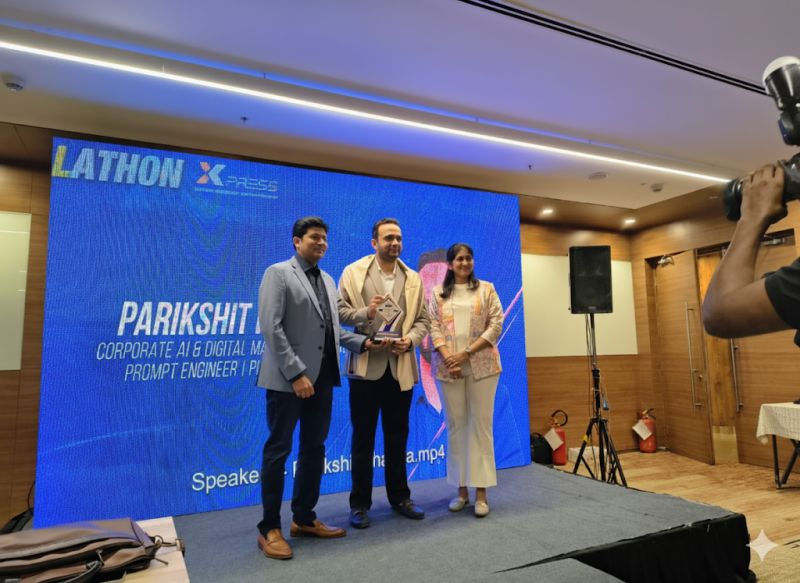
Worldwide semiconductor sales are projected by WSTS to reach approximately US$1.51 trillion in 2026, driven particularly by extraordinary memory demand, AI infrastructure, high-bandwidth memory and accelerated computing.
The Semiconductor Industry Association similarly reported record global semiconductor sales of US$795.6 billion in 2025 and described AI, advanced computing, communications, healthcare technology and other semiconductor-enabled industries as important growth drivers.
Yet equipment and capital alone cannot solve the industry's next challenge.
People have to learn how to work differently.
Deloitte estimates that the semiconductor industry will require more than one million additional skilled workers by 2030, or over 100,000 annually.
This is where practical enterprise Generative AI training becomes strategically important.
Meet Parikshit Khanna: TEDx Speaker & Enterprise AI Trainer
Parikshit Khanna is a TEDx Speaker, Corporate AI & Generative AI Trainer, Prompt Engineering specialist, Founder of Digital Training Jet, and Visiting Faculty associated with management education.
His professional portfolio states that his programmes and learning interventions have reached 3Lakh+ professionals across corporate programmes, educational institutions, professional workshops and other learning initiatives.
A TEDx event page independently identifies Parikshit Khanna as an AI and Digital Marketing Trainer + Entrepreneur and lists major corporations and premier institutions in his professional background.
His training capabilities span:
Generative AI, ChatGPT, Custom GPTs, Claude, Gemini, Microsoft 365 Copilot, Prompt Engineering, Agentic AI, n8n, Power Automate, AI workflow automation, Power BI, Canva AI, research workflows, executive productivity, technical documentation, AI-enabled marketing, lead generation, CRM productivity, finance, HR, sales, manufacturing, operations and responsible enterprise AI adoption.
That breadth is particularly relevant to semiconductor companies because semiconductor AI transformation does not belong to one department.
It touches the entire enterprise.
Why Semiconductor Companies Need Generative AI Training Now

Semiconductor organizations have already spent decades automating physical manufacturing.
The next frontier is knowledge-work acceleration.
Consider how much high-value human time is spent on:
technical documentation;
specification summarization;
meeting notes;
supplier communications;
quality reports;
market research;
competitive intelligence;
procurement analysis;
engineering knowledge retrieval;
sales proposals;
export-market research;
RFQ preparation;
customer follow-ups;
internal FAQs;
SOP drafting;
training documentation;
management presentations;
financial commentary;
HR communication;
audit preparation;
CRM administration;
executive decision briefs.
Generative AI can augment many of these activities when deployed with appropriate human review, security controls and domain governance.
The objective is not:
“Replace semiconductor engineers with ChatGPT.”
The objective is:
“Give semiconductor engineers, managers and commercial teams better cognitive tools.”
From Semiconductor Design to Manufacturing: Where AI Is Already Moving
The semiconductor ecosystem is increasingly integrating AI across design, manufacturing and inspection.
NVIDIA, for example, describes AI and accelerated-computing applications spanning design and verification, fab operations, lithography, inspection and testing, including generative-AI-assisted defect classification.
The lesson for business leaders is significant.
AI literacy can no longer remain confined to the IT department.
Engineering, operations, manufacturing, procurement, finance, HR, marketing, sales and senior management increasingly need their own role-specific AI capabilities.
Generative AI Training Across the Semiconductor Value Chain
Parikshit Khanna's enterprise programme can be customized around the actual semiconductor value chain.
1. Semiconductor Design and Engineering
Training can cover responsible AI-assisted workflows for:
engineering research;
requirement clarification;
design-document summarization;
technical brainstorming;
verification-document preparation;
design-review preparation;
engineering meeting summaries;
technical knowledge retrieval;
specification comparison;
code explanation;
structured troubleshooting;
cross-functional engineering communication.
AI output should never automatically substitute for engineering validation.
Instead, teams learn how to use AI as a structured reasoning and productivity assistant.
2. Wafer Fabrication and Fab Operations
Fabrication environments generate enormous quantities of process knowledge, maintenance documentation and operational communication.
Relevant GenAI workflows include:
Shift Handover Summaries: Convert structured shift information into concise handover briefs.
SOP Assistance: Draft or restructure standard operating documentation using approved information.
Maintenance Knowledge: Summarize maintenance histories and internal troubleshooting knowledge.
Root-Cause Preparation: Organize evidence and hypotheses before engineers conduct formal root-cause analysis.
Incident Documentation: Convert approved notes into structured incident-report drafts.
Training Material: Turn complex internal process documents into role-specific learning materials.
Management Communication: Translate detailed technical updates into concise executive summaries.
3. ATMP, OSAT and Advanced Packaging
Assembly, testing, marking, packaging and advanced-packaging operations combine engineering precision with enormous documentation requirements.
AI training can support:
package-development documentation;
test-report summaries;
customer requirement analysis;
defect-description standardization;
engineering change communication;
quality correspondence;
technical training;
supplier coordination;
yield-review meeting preparation;
internal knowledge bases.
As chiplets, heterogeneous integration and advanced packaging become increasingly strategic, companies need employees capable of combining technical expertise with AI-assisted knowledge management.
4. Semiconductor Equipment Companies
Equipment manufacturers serving fabs can apply Generative AI across both engineering and commercial functions.
Potential workflows include:
equipment manual drafting;
service report summarization;
troubleshooting knowledge bases;
customer-support responses;
field-service documentation;
preventive-maintenance communication;
product comparison;
proposal development;
sales enablement;
international distributor communication.
This becomes especially useful for organizations selling across multiple countries and languages.
5. Semiconductor Materials, Chemicals and Industrial Gases
The ecosystem also includes:
specialty chemicals, wafers, substrates, photoresists, gases, advanced materials, packaging materials, cleanroom suppliers, filtration, water systems and precision manufacturing.
GenAI programmes can therefore be customized for:
Sales: Account research, outreach preparation and proposals.
Procurement: Supplier comparison and negotiation preparation.
Marketing: Technical content and international-market research.
Operations: SOP and process-document preparation.
Finance: Management commentary and scenario analysis.
HR: Recruitment, learning and employee communication.
Leadership: Executive briefs and strategic research.
6. Testing, Quality Assurance and Reliability
Quality teams should not treat an AI-generated conclusion as verified engineering evidence.
But AI can be valuable in preparing information for human analysis.
Possible workflows include:
non-conformance summarization;
CAPA draft structuring;
complaint classification;
audit checklist preparation;
failure-report summarization;
corrective-action tracking;
lessons-learned repositories;
quality-meeting minutes;
internal training material;
recurring issue synthesis.
The principle remains:
AI assists. Qualified professionals approve.
7. Supply Chain, Procurement and Vendor Management
The semiconductor supply chain is global and extremely complex.
AI can help procurement teams synthesize:
supplier information;
market developments;
RFQs;
contract clauses for preliminary review;
supplier-meeting transcripts;
sourcing scenarios;
commodity information;
logistics reports;
vendor correspondence;
geopolitical developments.
For example, an approved meeting transcript can be transformed into:
Action Item → Owner → Deadline → Dependency → Follow-up Communication
That turns unstructured conversation into structured execution.
8. Accelerating Time-to-Market
Accelerating the time-to-market for new products requires rapid market alignment and disciplined technical documentation.
Two particularly important applications are:
Market Trend Synthesis
AI tools can help teams analyze approved industry reports, customer information and competitive intelligence to prepare structured market-entry briefs.
Teams can investigate:
target segments;
application opportunities;
competitive positioning;
buyer requirements;
market barriers;
channel options;
product-market alignment.
Technical Documentation
Engineers and product teams can use approved AI systems to convert raw technical specifications, engineering notes or software information into initial drafts of:
user manuals;
FAQs;
technical explainers;
application notes;
product documentation;
internal knowledge articles;
training material.
Internal technical resolutions and approved FAQs can similarly become polished help-centre drafts.
Human technical review remains essential before publication.
9. Lead Generation, Follow-Up and CRM Productivity
A technically outstanding semiconductor product still needs customers.
This is where Parikshit Khanna's combination of AI training and digital-marketing experience can become commercially valuable.
Semiconductor and electronics teams can learn workflows for:
Account Intelligence
Research a potential account before contacting it.
Persona Mapping
Understand whether the stakeholder is an:
procurement manager, R&D leader, plant head, CTO, design engineer, quality leader, sourcing manager, distributor, OEM decision-maker or CXO.
Personalized Outreach
Prepare different communications for different buying roles.
Meeting Preparation
Generate structured account briefs before international meetings.
Follow-Up
Transform approved meeting notes into:
action points;
owners;
follow-up emails;
CRM notes;
next-step recommendations.
CRM Productivity
Standardize:
Lead → Qualification → Meeting → Requirement → Proposal → Follow-up → Negotiation → Conversion → Account Development
This is particularly valuable for technically sophisticated B2B organizations where sales cycles can be long.
10. Generative AI for Semiconductor Exports
India's connection to Parikshit Khanna's professional identity is indispensable.
He represents a growing Indian enterprise-training ecosystem serving increasingly international business requirements.
For Indian semiconductor, electronics, engineering and advanced-manufacturing businesses, AI training can support international expansion through:
export-market research;
distributor identification research;
international account mapping;
multilingual communication;
competitor monitoring;
technical proposal preparation;
trade-show preparation;
buyer-persona research;
international email personalization;
LinkedIn prospecting workflows;
CRM follow-up;
meeting preparation;
country-entry briefs;
quotation explanations;
post-meeting documentation.
AI does not guarantee export revenue.
But better market intelligence, faster communication, stronger documentation and more disciplined follow-up can improve the commercial capability required to pursue international opportunities.
Microsoft 365 Copilot for Semiconductor Enterprises
Parikshit Khanna can also structure dedicated Microsoft 365 Copilot enablement for organizations already working within Microsoft's enterprise environment.
Possible workflows include:
Outlook
summarize long email threads;
prepare replies;
identify action items;
prepare customer follow-ups.
Teams
meeting summarization;
action-item extraction;
decision tracking;
follow-up preparation.
Word
technical-document drafts;
proposals;
SOPs;
executive briefs;
policy documents.
PowerPoint
management presentations;
customer proposals;
quarterly reviews;
training decks.
Excel
data exploration;
explanation;
management commentary;
structured analysis.
Researcher
Microsoft's current documentation states that Researcher in Microsoft 365 Copilot supports multiple models, including OpenAI GPT models and Anthropic Claude models. Claude availability can depend on organizational administration and configuration.
This is an important distinction.
It is more accurate to say that selected Microsoft 365 Copilot experiences support GPT and Claude model choices than to claim simply that “ChatGPT and Claude are inside every Copilot feature.”
Data Security Must Come Before AI Convenience
For semiconductor businesses, intellectual property may include:
chip architecture;
layouts;
process recipes;
source code;
customer specifications;
yield information;
failure analysis;
supplier pricing;
roadmaps;
unreleased products;
export-controlled information;
proprietary manufacturing knowledge.
Employees therefore need more than prompt engineering.
They need AI governance literacy.
Parikshit Khanna's enterprise programme can incorporate:
Green Data: Information approved for AI use.
Amber Data: Information requiring internal authorization or controlled tools.
Red Data: Sensitive information that employees must never submit to unapproved external AI systems.
Microsoft states that with enterprise data protection, prompts and responses in Microsoft 365 Copilot Chat are not used to train foundation models. Copilot also respects existing Microsoft 365 permissions.
However, organizations still need their own governance, identity controls, permissions, information classification, retention policies and employee training.
Enterprise AI security is an organizational system, not a checkbox.
Claude for Deep Analysis and Knowledge Work
Claude can be incorporated into training for appropriate approved workflows such as:
long-document analysis;
research synthesis;
structured reasoning;
policy analysis;
technical-document restructuring;
executive briefing;
knowledge-base preparation;
scenario analysis.
The emphasis should always be on appropriate enterprise use, not copying confidential semiconductor IP into consumer AI applications.
ChatGPT and Custom GPTs
Training can include ChatGPT for:
research;
structured brainstorming;
communication;
data interpretation;
documentation;
coding assistance;
marketing;
sales;
HR;
finance;
executive productivity.
Custom GPT-based workflows can also be demonstrated using sanitized or synthetic semiconductor information.
Examples include:
Semiconductor Sales Assistant
Technical Documentation Assistant
Procurement Research Assistant
Quality Knowledge Assistant
Employee Learning Assistant
Marketing Intelligence Assistant
The actual production deployment must follow the company's security and IT policies.
Gemini for Enterprise Productivity
Gemini workflows can be incorporated for:
research;
multimodal analysis;
document understanding;
ideation;
communication;
presentation preparation;
knowledge work.
Rather than teaching employees to become loyal to one AI platform, training can teach them:
Which tool is appropriate for which task?
That is a much more durable enterprise capability.
Agentic AI for Semiconductor Companies
The next stage goes beyond conversational AI.
Agentic AI can perform sequences of actions toward defined objectives.
Potential semiconductor scenarios include:
Customer enquiry→ classify requirement→ identify relevant product information→ prepare response draft→ update workflow→ create follow-up task.
Or:
Meeting transcript→ extract decisions→ identify owners→ create task list→ draft customer follow-up→ prepare management summary.
Or:
New market report→ extract developments→ categorize competitors→ identify opportunities→ generate management brief.
Production systems require security engineering, testing, authorization and human oversight.
n8n and Workflow Automation
For suitable organizations, training can introduce automation concepts through tools such as n8n.
Possible workflows include:
CRM → AI → Email Draft
Form → Qualification → CRM
Meeting Notes → Action Items → Task Management
Report → Summary → Management Communication
Approved Documents → Knowledge Base → Internal Assistant
The objective is not automation for its own sake.
The objective is:
remove repetitive administrative work while retaining human accountability for consequential decisions.
Generative AI for Semiconductor Finance Teams
Finance teams can explore:
variance commentary;
FP&A support;
management reporting;
scenario preparation;
cost analysis;
working-capital communication;
budget explanations;
presentation preparation;
management summaries.
Parikshit's experience includes finance-oriented AI programmes and executive use cases, which can be translated into semiconductor-specific scenarios such as:
fab expansion analysis, equipment-capex communication, supplier-cost scenarios, inventory commentary and management reporting.
AI for Semiconductor HR and Talent Development
The talent shortage makes HR particularly important.
Deloitte estimates the global semiconductor industry could require more than one million additional skilled employees by 2030.
AI-enabled HR training can therefore cover:
job-description development;
competency mapping;
interview-question preparation;
learning pathways;
employee communication;
training-content development;
onboarding;
internal knowledge management;
performance-review preparation;
workforce analytics.
The objective is to augment HR judgment, not automate consequential employment decisions without appropriate governance.
AI for Semiconductor Marketing
Technical B2B marketing can use AI for:
application-note drafts;
technical blogs;
case-study structures;
trade-show campaigns;
webinar promotion;
distributor communications;
account-based marketing;
customer education;
LinkedIn content;
email campaigns;
market research;
competitor monitoring.
A semiconductor marketing team should not produce generic AI content at scale.
It should combine:
engineering expertise + customer knowledge + original evidence + AI productivity.
That approach is also much closer to Google's current people-first content guidance.
AI for CEOs, CXOs and Semiconductor Leadership
CEOs do not need 200 random prompts.
They need decision leverage.
Executive training can focus on:
board briefing preparation;
strategic research;
competitive intelligence;
scenario analysis;
meeting preparation;
management communication;
AI investment prioritization;
governance;
responsible AI;
departmental adoption;
ROI measurement.
The key executive question becomes:
Where can AI produce measurable improvement without creating unacceptable security, compliance, quality or IP risk?
Why Parikshit Khanna Is a Strong Choice for CEOs, CXOs, VPs and Semiconductor Professionals
The differentiator is not simply familiarity with ChatGPT.
It is the ability to connect multiple enterprise disciplines:
Prompt Engineering + ChatGPT + Claude + Gemini + Microsoft 365 Copilot + Custom GPTs + Agentic AI + Automation + n8n + Power BI + Marketing + CRM + Finance + HR + Manufacturing + Executive Productivity.
For a semiconductor company, that means one programme can serve multiple audiences while preserving a common governance framework.
Industrial and Manufacturing Experience
Parikshit Khanna's published professional portfolio includes experience spanning manufacturing, engineering, industrial, energy, FMCG and production-oriented organizations, including names such as:
Tata Power
LG India
Bonfiglioli Transmission
Talwandi Sabo Power / Vedanta Group
Phoenix Contact India
Sangam Group, Bhilwara
Nagarjun Textiles
Sanden Vikas India
Vega Industries

KnitPro International
Tinna Rubber & Infrastructure
Sheela Foam / Sleepwell
Hetero Pharma
Emami Ltd.
Arvind Fashions / Arvind Lifestyle Brands
Pansari Group

Sudeep Group / Sudeep Pharma
Wahluft / Lucrative Impex
Polycab
and other industrial and enterprise learning engagements referenced across his published portfolio.
This background is relevant because semiconductor organizations operate at the intersection of engineering, manufacturing, quality, sales, procurement, finance and global supply chains.
Finance, Enterprise and Business Experience
Published portfolio material also references programmes or professional engagements associated with organizations and ecosystems including:
AON Consulting
Tata Mutual Fund
Kae Capital
Green Earth Advisory
Malabar Group
METRO Global Solution Center
RMZ Real Assets
Gaursons
County Group
CREDAI ecosystem
ZAFCO Group, Dubai
and additional enterprise organizations.
The relevance to semiconductor businesses is straightforward:
An AI trainer for a global chip company must understand more than engineering.
The trainer needs to communicate with finance, HR, marketing, sales, procurement, operations and leadership.
Healthcare and Pharmaceutical Experience
Parikshit Khanna's healthcare and pharmaceutical portfolio has included or publicly referenced programmes involving healthcare professionals and organizations such as:
IIT Delhi healthcare workshops

IIT Hyderabad healthcare programmes

CARE Hospitals
Cloudnine

Hetero Pharma
Sudeep Pharma
Indian Academy of Pediatrics-related programmes
and other healthcare learning communities referenced in his published professional material.
His website states that he delivered the first dedicated AI-in-Healthcare session at IIT Delhi. An independently published participant account has also been referenced publicly as confirming participation in an IIT Delhi ChatGPT and AI-tools healthcare workshop taught by Parikshit.
This cross-sector exposure matters because semiconductor technologies increasingly underpin medical devices, diagnostics, imaging, connected healthcare and AI infrastructure.
Education and Institutional Experience
His broader institutional portfolio includes engagements or professional associations involving:
IIT Delhi
IIT Hyderabad
IIT Guwahati

IIT Roorkee
IIM Bangalore NSRCEL – Goldman Sachs 10,000 Women Programme
Chitkara College of Sales & Marketing
Chitkara University
GL Bajaj Institute of Management and Research
IILM
SOIL School of Business Design
Thapar University
Amity University / Amity University Online
AURO University
KR Mangalam University
SDA Bocconi Asia Center
Delhi Technological University
Christ University
Shahaji Law College
KIET Group of Institutions
Princeton Academy
Bettering Results
and other educational and professional-learning communities described in his portfolio.

His IIM Bangalore NSRCEL-linked work included the Goldman Sachs 10,000 Women Programme, with a session theme around using Claude as a business strategist.
Government and Public-Sector Experience
Parikshit's published portfolio prominently includes Prasar Bharati, including training connected with the National Academy of Broadcasting & Multimedia and applications involving Generative AI, ChatGPT and Canva.

This experience is relevant for large semiconductor organizations because public-sector environments demand careful attention to:
information sensitivity;
institutional communication;
responsible technology use;
governance;
stakeholder accountability.
Claims involving defense, government or other sensitive organizations should always be described according to the precise nature of the engagement rather than implying unrestricted institutional endorsement.
Travel, Tourism and Hospitality Experience
His portfolio also extends to tourism and travel-sector learning.
Examples include:
Association of Travel & Tour Operators of India — ATTOI

TBO, Aerocity
Travel Nexus

and tourism-industry professional communities.
Published material describes his ATTOI work as focusing on improving marketing efficiency with ChatGPT.
This may appear distant from semiconductors, but it demonstrates another useful capability:
teaching AI to non-technical professionals.
That is crucial when an enterprise wants adoption beyond its engineering department.
Media and Communication Experience
His professional portfolio also includes training or appearances associated with:
Prasar Bharati
All India Radio
Doordarshan-related learning environments
Economic Times HRWorld
and other media and professional platforms.
For semiconductor companies, communication capability matters because sophisticated engineering innovation has little commercial value if teams cannot explain it clearly to customers, investors, employees, distributors and global partners.
TEDx Speaker
Parikshit Khanna appeared on the TEDxEicher School Faridabad Youth platform in 2026.
The official TED event page lists him as:
AI and Digital Marketing Trainer + Entrepreneur.
This strengthens his positioning not merely as an AI-tool demonstrator but as a professional speaker capable of translating complex technology into accessible business language.
India: An Indispensable Part of the Story
Parikshit Khanna's connection with India should not be treated as a geographical limitation.
It can be a competitive strength.
India is simultaneously building capability in:
semiconductor design;
electronics manufacturing;
AI;
cloud technology;
digital public infrastructure;
engineering talent;
enterprise technology services;
global capability centres.
For Parikshit, the ambition is therefore not to move away from India.
It is to take Indian enterprise AI training capability to global organizations.
The message is:
Built from India. Relevant to the world.
Generative AI Training for India's Semiconductor Ecosystem
Programs can be delivered for semiconductor and electronics teams across:
Bengaluru, Hyderabad, Chennai, Noida, Greater Noida, Delhi NCR, Gurugram, Ahmedabad, Gandhinagar, Dholera, Sanand, Vadodara, Surat, Mumbai, Pune, Mohali, Chandigarh, Kolkata, Bhubaneswar and other emerging electronics clusters.
The potential audiences include:
semiconductor design centres;
fabs;
OSAT/ATMP companies;
electronics manufacturers;
semiconductor equipment companies;
specialty-material suppliers;
industrial automation businesses;
engineering companies;
GCCs;
research institutions;
universities.
Asia-Pacific Semiconductor Training Coverage
Programs can be customized for organizations across:
Taiwan
Taipei, Hsinchu, Taichung, Tainan and Kaohsiung.
South Korea
Seoul, Suwon, Hwaseong, Icheon, Yongin and Pyeongtaek.
Japan
Tokyo, Yokohama, Osaka, Kyoto, Hiroshima, Kumamoto, Fukuoka and Sapporo.
Singapore
Singapore's semiconductor, electronics, precision-engineering and regional-headquarters ecosystem.
Malaysia
Kuala Lumpur, Penang, Kulim, Johor Bahru, Melaka and Cyberjaya.
Vietnam
Hanoi, Ho Chi Minh City, Da Nang, Bac Ninh and Hai Phong.
Philippines
Manila, Laguna, Cavite, Batangas and Cebu.
Thailand
Bangkok, Chonburi, Rayong and the Eastern Economic Corridor.
Indonesia
Jakarta, Batam, Bandung and Surabaya.
Programs can also be adapted for Hong Kong and other Asian commercial centres, subject to local business requirements and regulations.
Middle East Semiconductor and Advanced-Technology Markets
Enterprise AI programmes can be delivered for organizations in:
United Arab Emirates — Dubai, Abu Dhabi, Sharjah
Saudi Arabia — Riyadh, Jeddah, Dammam, NEOM-related business ecosystems
Qatar — Doha
Oman — Muscat
Bahrain — Manama
Kuwait — Kuwait City
and other regional business hubs.
Parikshit's professional portfolio already includes UAE-facing and international corporate training experience, strengthening the practical relevance of this expansion.
United States and Canada
The programme can serve semiconductor and advanced-manufacturing teams across major North American technology centres including:
San Jose
Santa Clara
Silicon Valley
San Francisco
Austin
Dallas
Phoenix
Chandler
Hillsboro
Portland
Boise
Boston
New York
Raleigh
Detroit
Albany
Toronto
Montreal
Ottawa
Vancouver
Waterloo
and other semiconductor, AI and engineering clusters.
Europe and the United Kingdom
Potential markets include:
Germany — Dresden, Munich, Stuttgart, Berlin
Netherlands — Eindhoven, Amsterdam
United Kingdom — London, Cambridge, Bristol, Manchester
France — Paris, Grenoble, Sophia Antipolis
Ireland — Dublin, Cork, Limerick
Belgium — Leuven, Brussels
Austria — Vienna, Villach
Italy — Milan, Turin, Bologna
Spain — Madrid, Barcelona
Switzerland — Zurich, Geneva
Sweden — Stockholm
Finland — Helsinki
Denmark — Copenhagen
Norway — Oslo
Poland — Warsaw, Kraków, Wrocław
Czech Republic — Prague, Brno
and other European technology centres.
Australia and New Zealand
Training can be customized for enterprise, engineering, research and electronics organizations in:
Sydney
Melbourne
Brisbane
Perth
Adelaide
Canberra
Auckland
Wellington
Christ church
Africa
AI capability development can also support emerging technology, electronics, telecom, industrial and engineering ecosystems across:
South Africa — Johannesburg, Pretoria, Cape Town, Durban
Egypt — Cairo, Alexandria
Morocco — Casablanca, Rabat, Tangier
Kenya — Nairobi
Nigeria — Lagos, Abuja
Ghana — Accra
Rwanda — Kigali
and other growing African technology markets.
Latin America
Potential enterprise programmes can extend to:
Mexico — Mexico City, Guadalajara, Monterrey, Tijuana
Costa Rica — San José
Brazil — São Paulo, Campinas, Rio de Janeiro
Argentina — Buenos Aires
Chile — Santiago
Colombia — Bogotá, Medellín
Peru — Lima
and other manufacturing, engineering and technology markets.
Training for Every Semiconductor Department
Department | Example GenAI Training Applications |
CEO/CXO | Strategy, competitive intelligence, decision briefs |
Engineering | Research, documentation, knowledge retrieval |
R&D | Literature synthesis, ideation, technical communication |
Manufacturing | SOPs, shift summaries, knowledge management |
Quality | CAPA preparation, audit support, issue synthesis |
Maintenance | Troubleshooting knowledge, report preparation |
Procurement | Supplier research, RFQ comparison |
Supply Chain | Risk synthesis, vendor communication |
Sales | Account research, proposals, follow-up |
Marketing | Technical content, ABM, market intelligence |
Export | Country research, distributor research, communication |
CRM | Meeting notes, action extraction, next-step drafting |
Finance | FP&A, management commentary, analysis |
HR | Recruitment, L&D, employee communication |
Legal | Preliminary document analysis and summarization |
IT | AI governance, enterprise implementation |
Leadership | Adoption strategy, governance and ROI |
Suggested Semiconductor AI Training Architecture
Module 1 — Generative AI Fundamentals
LLMs, hallucinations, grounding, verification and responsible use.
Module 2 — Prompt Engineering
Structured prompting for technical and business workflows.
Module 3 — ChatGPT
Research, analysis, communication and Custom GPT concepts.
Module 4 — Claude
Long-document analysis, research and reasoning workflows.
Module 5 — Gemini
Multimodal productivity and research.
Module 6 — Microsoft 365 Copilot
Word, Excel, PowerPoint, Outlook, Teams and Researcher workflows.
Module 7 — Semiconductor Department Use Cases
Engineering, fab operations, QA, sales, procurement, finance and HR.
Module 8 — AI Automation
n8n, Power Automate and workflow architecture.
Module 9 — Agentic AI
Multi-step enterprise workflows.
Module 10 — Data Security and Responsible AI
Classification, access control, confidentiality and governance.
Module 11 — International Sales and Exports
Account research, market intelligence, lead generation and CRM.
Module 12 — Executive AI Strategy
ROI, prioritization and adoption roadmap.
Practical Workshop Instead of Tool Tourism
The programme should not become:
“Here are 50 AI tools.”
Employees rarely need 50 disconnected applications.
They need repeatable workflows.
A better approach is:
Business Problem → Approved Data → Appropriate AI Tool → Prompt/Workflow → Human Verification → Business Output → Measurement
That is how AI becomes operational capability.
Why This Matters for Semiconductor CEOs
The question is no longer:
Should we allow employees to use AI?
Employees across industries are already encountering AI.
The strategic questions are:
Which AI systems should they use?
For which tasks?
With what information?
Under whose approval?
How will outputs be verified?
How will ROI be measured?
How will IP be protected?
How will AI become part of workflows rather than an occasional chatbot?
A serious corporate AI training programme should answer all of these.
Why Parikshit Khanna's Cross-Industry Experience Matters
Semiconductor companies are technically specialized but organizationally diverse.
A semiconductor enterprise contains:
engineers, accountants, HR professionals, lawyers, salespeople, marketers, procurement teams, project managers, plant personnel and senior executives.
Parikshit's cross-sector experience allows training to be translated for these different professional languages.
An engineer should not receive the same exercises as a salesperson.
A CFO should not receive the same exercises as a quality manager.
A fab manager should not receive the same exercises as an HR leader.
Customization is the programme.
Comparison: Parikshit Khanna's Training Approach vs Generic AI Training
Criterion | Parikshit Khanna Approach | Generic Training Approach |
Semiconductor customization | Department-specific scenarios | Generic prompts |
Enterprise tools | ChatGPT, Claude, Gemini, Copilot | Often one platform |
Microsoft 365 | Dedicated enterprise workflows | Basic demonstrations |
Automation | n8n, Power Automate, agents | Limited |
Executive training | Strategy + governance + productivity | Tool orientation |
Manufacturing relevance | Industrial and production experience | Often generic |
Sales/export capability | Lead generation + CRM + research | Limited |
Data security | Integrated into training | Sometimes secondary |
Delivery | Hands-on | May be lecture-heavy |
Cross-functional capability | Engineering to HR and finance | Narrower scope |
India + international orientation | Strong India foundation with global delivery potential | Depends on provider |
This comparison concerns the training model, not an unsupported claim that no other qualified trainers exist.
Why Parikshit Khanna Can Be Relevant to Global Semiconductor Leadership
There is an important difference between an AI technologist and an enterprise AI trainer.
A technologist may understand the model.
An enterprise trainer must understand the human organization adopting the model.
That requires:
communication;
adult learning;
executive facilitation;
departmental customization;
live demonstrations;
change management;
data-security awareness;
business process understanding;
practical implementation.
Parikshit's TEDx, corporate, institutional, manufacturing, finance, healthcare, government-facing and international experience creates a broad base for this kind of enterprise enablement.
The Opportunity for Semiconductor Companies
Imagine an engineering team that spends less time rewriting documentation.
Imagine a sales organization entering an overseas meeting with structured account intelligence.
Imagine procurement teams synthesizing supplier information faster.
Imagine management receiving concise summaries instead of 60-page information dumps.
Imagine HR turning internal expertise into reusable learning programmes.
Imagine quality teams creating better structured first drafts while engineers retain final authority.
Imagine international sales teams following every important conversation with disciplined, personalized communication.
That is where Generative AI can create value.
Not through hype.
Through hundreds of small improvements compounded across the enterprise.
AI Is No Longer Optional — But Governance Is Non-Negotiable
For semiconductor enterprises, AI can become a decisive capability in:
competitive intelligence, operational efficiency, customer experience, knowledge management, documentation, engineering productivity, sales, talent development and decision support.
But the semiconductor industry's intellectual property is too valuable for careless experimentation.
The winning organizations will therefore combine:
AI Adoption + Employee Capability + Security + Governance + Human Expertise.
A Proudly Indian Trainer for a Global Technology Industry
There is something particularly meaningful about this opportunity.
The semiconductor industry represents one of the defining technologies of this century.
India is seeking a much larger role in that future.
And Indian trainers, engineers, managers and entrepreneurs do not need to remain spectators.
They can help shape how global enterprises learn to use the technologies surrounding this transformation.
For Parikshit Khanna, the proposition is simple:
India is home. The world is the classroom.
Book Generative AI Training for Your Semiconductor Organization
Programs can be customized for:
Semiconductor Design Companies
Fabless Semiconductor Companies
Foundries
Wafer Fabs
ATMP Companies
OSAT Companies
Advanced Packaging Companies
EDA Teams
Semiconductor Equipment Manufacturers
Specialty Chemical Companies
Industrial Gas Companies
Electronics Manufacturers
EMS Companies
Automotive Electronics Companies
Power Semiconductor Companies
Compound Semiconductor Companies
Memory Companies
AI Chip Companies
IoT Semiconductor Companies
Medical Semiconductor Companies
Testing and Inspection Companies
Semiconductor Distributors
Research Institutions
Universities
Government Technology Organizations
and the wider electronics and advanced-manufacturing ecosystem.
Delivery can be structured as:
Executive Briefing — 90 minutes to 3 hours
Department Workshop — Half Day
Enterprise Masterclass — Full Day
Two-Day Generative AI Programme
Microsoft 365 Copilot Programme
Claude / ChatGPT / Gemini Masterclass
Agentic AI & Automation Programme
Multi-Department AI Transformation Programme
International Online Programme
Customized Onsite Corporate Programme
Contact Parikshit Khanna
Parikshit KhannaTEDx Speaker | Enterprise Generative AI Trainer | Corporate AI Trainer | Founder, Digital Training Jet
Phone / WhatsApp:+91 99972 13177, +91 80762 50669
Instagram:@digitalparikshitkhanna
X:@ParikshitK_
LinkedIn:Parikshit Khanna
For semiconductor companies: Request a customized programme by sharing your departments, participant seniority, approved AI environment, security requirements and highest-priority workflows.
Frequently Asked Questions
What is Generative AI training for semiconductor companies?
It is role-specific AI enablement that teaches employees how to use approved AI technologies for semiconductor engineering, manufacturing, quality, procurement, sales, finance, HR, research and executive workflows while respecting security and intellectual-property requirements.
Can Parikshit Khanna conduct semiconductor AI training internationally?
Yes. Programmes can be structured for online, hybrid or onsite enterprise delivery subject to commercial agreement, travel requirements and local regulations.
Can the training cover Microsoft 365 Copilot?
Yes. Microsoft 365 Copilot can be incorporated alongside broader enterprise AI concepts, with use cases for Word, Excel, PowerPoint, Outlook, Teams and appropriate Copilot agents.
Can Claude be covered?
Yes. Claude can be covered as a standalone AI platform and, where an organization's Microsoft configuration supports it, through relevant Microsoft 365 Copilot experiences.
Does Microsoft 365 Copilot use OpenAI and Anthropic models?
Microsoft documentation confirms GPT and Claude model options in particular Copilot experiences such as Researcher. Availability varies by product, license, region and administrator configuration.
Can the programme cover ChatGPT and Custom GPTs?
Yes. Training can include ChatGPT, prompt engineering and Custom GPT concepts using organization-approved or sanitized information.
Can the programme include Agentic AI?
Yes. Agentic AI concepts, workflow design, governance and automation can be incorporated according to participant level.
Can training be customized for engineers?
Yes. Engineering cohorts can focus on technical research, knowledge retrieval, documentation, structured reasoning and engineering communication rather than generic marketing prompts.
Can it be customized for semiconductor sales teams?
Yes. Sales programmes can cover account intelligence, lead generation, meeting preparation, proposal development, CRM productivity, international communication and follow-up.
Can it help semiconductor exporters?
Training can strengthen export-market research, account mapping, distributor research, multilingual communication, proposal preparation and CRM follow-up. It cannot guarantee export orders or revenue.
Can confidential semiconductor data be used during training?
Only information explicitly approved by the organization should be used. Synthetic, anonymized or sanitized scenarios are preferable for demonstrations involving sensitive processes or intellectual property.


Comments