
Ignite Your Creativity: Jaipur's Premier Graphic Design Course for Future Design Stars

Updated: 6 days ago

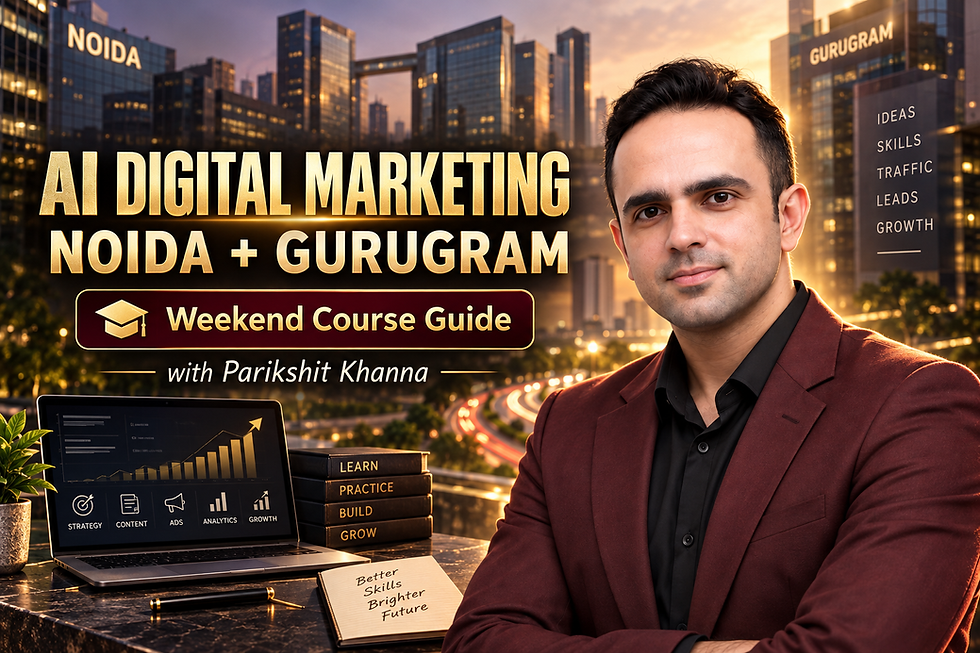
Are you ready to transform your artistic passion into a lucrative career? Digital Training Jet presents an unparalleled Graphic Design Course in the vibrant city of Jaipur, led by renowned digital marketing expert Parikshit Khanna. This comprehensive program is designed to equip you with cutting-edge skills and industry insights, setting you on the path to success in the dynamic world of graphic design.
Why Our Graphic Design Course Stands Out:
Practical, Industry-Focused Curriculum
Personalized Mentorship
State-of-the-Art Design Tools
Real-World Project Experience
Career Launch Support
Course Breakdown: Your Journey to Design Mastery
Module 1: Design Fundamentals (2 weeks)
Practical Benefit: Develop a keen eye for visual aesthetics
Learning Outcome: Create balanced, impactful designs across various mediums
Module 2: Adobe Creative Suite Mastery (3 weeks)
Practical Benefit: Gain proficiency in industry-standard software
Learning Outcome: Produce professional-grade designs using Photoshop, Illustrator, and InDesign
Module 3: Web and Mobile Design (2 weeks)
Practical Benefit: Expand your skill set to meet digital design demands
Learning Outcome: Design responsive websites and engaging mobile app interfaces
Module 4: Branding and Visual Identity (1 week)
Practical Benefit: Understand the power of cohesive brand design
Learning Outcome: Create comprehensive brand identity packages
Module 5: Portfolio Development and Career Preparation (2 weeks)
Practical Benefit: Position yourself competitively in the job market
Learning Outcome: Graduate with a stunning portfolio and job-ready skills
Don't let this opportunity slip away! Enroll now to kickstart your journey towards becoming a sought-after graphic designer in today's digital age.
Contact Information: Phone: 8076250669 Website: https://www.digitaltrainingjet.com/course
Limited seats available - Secure your spot today and unlock your creative potential!
FROM: PRIYA SINGH- JAIPURIA SCHOOL OF BUSINESS, GHAZIABAD.
A poster-design exercise using a fictional Jaipur exhibition
A proposed classroom exercise for graphic design can use a fictional Jaipur exhibition about everyday objects and local craft. Give learners an invented event title, date, venue, opening hours and entry information, together with photographs that are original or appropriately licensed. State clearly that the exhibition is a design brief, not an announced event. The objective is to produce a readable poster with a deliberate visual hierarchy, rather than guarantee a career outcome or a particular level of professional expertise.
Start with a pencil layout or a simple digital wireframe. Decide which information a reader must notice first: event title, date and venue. Limit the number of competing type styles, leave enough space around the main message and choose colours that preserve readable contrast. Use a photograph because it supports the exhibition idea, not merely because it appears decorative. Plan where a short contact or booking instruction belongs without reducing essential details to tiny text.
A useful planning prompt is: “Turn this fictional exhibition brief into a poster content hierarchy. Suggest three layout concepts and explain the reading order for each. Keep every event fact exactly as supplied. Do not invent organisers, sponsors, awards or availability.” The expected output is a content order and concept description that learners can build in their chosen design software. Ask participants to create two visual versions from the same facts so the comparison focuses on design choices rather than different messages.
Evaluate both versions at the intended viewing size. Ask a peer to locate the date and venue within a few seconds and record any hesitation. Check spelling, alignment, image quality and whether essential text remains readable when the poster is reduced. Prepare a final review sheet listing the approved copy, asset permissions and required output dimensions. If printed, confirm production requirements with the actual provider before export. The exercise develops a repeatable design process: understand the brief, organise information, build alternatives and test readability. Those habits are useful across many design tasks without claiming that one poster proves complete professional readiness.


Comments