Claude AI:The Ultimate Guide

What Is Claude AI? Complete History, Models, Features, Uses and Future of Anthropic Claude

What Is Claude AI?
Claude is a family of advanced artificial intelligence models and AI products developed by Anthropic, an AI research and product company focused on building reliable, interpretable and steerable AI systems.
Claude began as a conversational AI assistant capable of answering questions, summarising documents, writing content and helping with code. It has since evolved into a much broader AI platform capable of analysing documents and images, conducting web research, using tools, working with business data, interacting with software, writing and debugging code, creating documents and visual work, and supporting increasingly autonomous AI-agent workflows.
Anthropic originally introduced Claude publicly on March 14, 2023, describing it as a next-generation AI assistant based on research into creating helpful, honest and harmless AI systems. Its initial use cases included summarisation, search, question answering, writing and coding.
By October 2026, Claude is no longer accurately described as only a chatbot. Anthropic presents Claude as a thinking and work partner that can connect with documents, tools and web information, perform research, analyse complex material and help users create working outputs.
This transformation from conversational assistant to an increasingly agentic AI platform is one of the most important parts of Claude's history.
Who Created Claude?
Claude was created by Anthropic.
Anthropic describes itself as an AI safety and research company focused on building AI systems that are reliable, interpretable and steerable. It operates as a Public Benefit Corporation.
Anthropic's early history goes back to 2021. In May 2021, the company announced a $124 million funding round to support research into reliable and steerable general AI systems. At that time, Anthropic identified Dario Amodei as CEO and Daniela Amodei as President.
Anthropic's current leadership information identifies Dario Amodei and Daniela Amodei as co-founders, alongside other co-founders including Tom Brown, Jack Clark, Jared Kaplan, Sam McCandlish and Chris Olah.
Claude subsequently became Anthropic's principal production AI model and product family.
How Does Claude Work?
Claude belongs to the broader category of large language models, or LLMs.
At a simplified level, Claude receives information supplied by a user, analyses the relationships and patterns within that information and generates an appropriate response based on its training, instructions, available context and tools.
However, modern Claude systems go considerably further than basic text prediction.
Claude can work with textual instructions, documents, images, code, web information and external tools depending on the model, product and permissions available. Current Claude models support text and image inputs, vision, multilingual tasks and tool use.
The modern Claude experience therefore combines several layers : This distinction matters because asking "What is Claude?" in 2026 is very different from asking the same question in 2023.
Layer | What it means |
Foundation model | The underlying Claude language model performs reasoning, language understanding and generation |
Context | Claude considers the conversation, uploaded material and other authorised information |
Reasoning | More advanced models can spend additional computation working through difficult problems |
Vision | Claude can interpret information contained in images |
Tool use | Developers can give Claude access to external tools and functions |
Web access | Claude can search current information when web search is enabled |
Integrations | Claude can connect with supported external applications and organisational information |
Agents | Claude can plan and execute multi-step workflows using tools |
Safety systems | Anthropic applies training, constitutional principles, evaluations and additional safeguards |
Claude and Constitutional AI
One characteristic that has played an important role in Claude's development is Constitutional AI.
Anthropic describes Constitutional AI as an approach in which an AI model is guided by an explicit collection of principles, or a "constitution", rather than relying exclusively on human feedback to determine desirable behaviour.
Anthropic has described a training process in which models can critique and revise responses according to constitutional principles, followed by reinforcement-learning processes that incorporate AI-generated feedback based on those principles.
The aim is not to claim that Claude can never make mistakes. Instead, the constitution provides an explicit framework intended to influence how the model handles helpfulness, safety, ethics and difficult trade-offs.
Anthropic published a substantially revised Claude Constitution in January 2026. The company said the new document had become a foundational part of Claude's training and was designed to explain not just what behaviours Anthropic wanted, but why those principles mattered.
According to Anthropic, the current framework seeks to make Claude broadly safe, broadly ethical, compliant with relevant guidelines and genuinely helpful. Anthropic also explicitly acknowledges that actual model behaviour may sometimes fall short of those intentions.
That final point is important. Constitutional AI should not be interpreted as a guarantee that every Claude response is accurate, unbiased or appropriate.
Complete History of Claude AI: 2021 to 2026
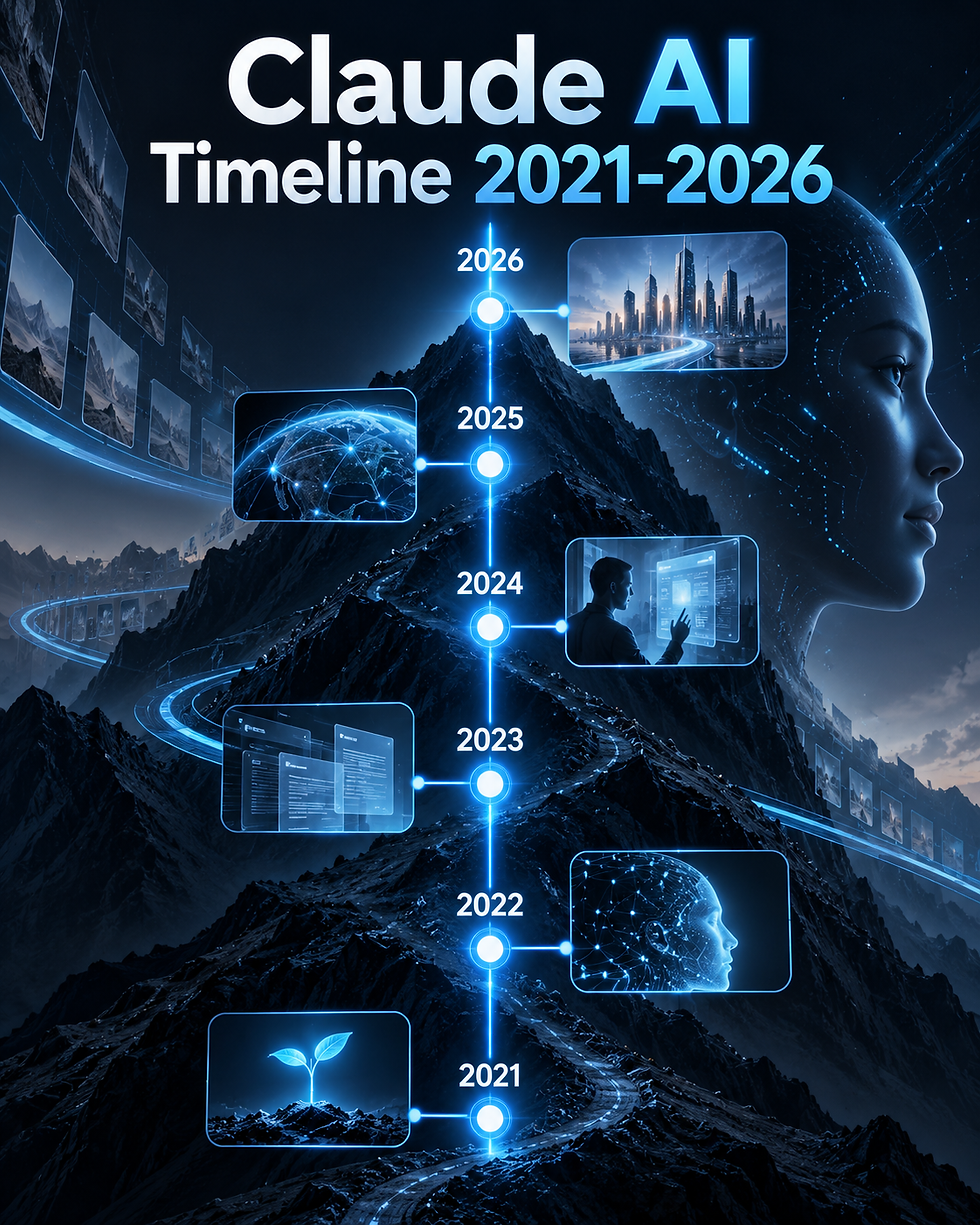
The following timeline covers the major verified milestones in Claude and Anthropic's development.
Date | Major Claude / Anthropic Milestone |
May 2021 | Anthropic announced a $124 million financing round to support research into reliable and steerable AI systems. |
2022 | Anthropic's Constitutional AI research established an important part of the safety and alignment philosophy later used in Claude. |
March 14, 2023 | Anthropic publicly introduced Claude after testing it with partners including Notion, Quora and DuckDuckGo. |
May 2023 | Claude's context window expanded from roughly 9K to 100K tokens, enabling users to provide much larger documents and datasets. |
May 2023 | Anthropic publicly explained Claude's Constitution and Constitutional AI approach. |
July 11, 2023 | Claude 2 launched with improvements in coding, mathematics, reasoning and longer responses, together with wider access through Claude.ai and API. |
September 2023 | Anthropic introduced Claude Pro, initially offering higher usage and priority access. |
November 21, 2023 | Claude 2.1 arrived with a 200K-token context window, improvements aimed at reducing hallucinations, system prompts and beta tool use. |
March 4, 2024 | Anthropic announced the Claude 3 family, comprising Haiku, Sonnet and Opus. |
March 13, 2024 | Claude 3 Haiku was released as the faster, lower-cost member of the Claude 3 family. |
May 2024 | Claude expanded through the Team plan, mobile availability and increasingly capable tool-use features. |
June 21, 2024 | Claude 3.5 Sonnet launched, bringing major improvements in reasoning, coding and vision. Anthropic also introduced the first version of Artifacts. |
June 25, 2024 | Anthropic launched Projects, allowing users to organise chats and give Claude project-specific knowledge. |
August 2024 | Artifacts became generally available, expanding Claude from a conversational interface into a collaborative creation workspace. |
September 2024 | Claude for Enterprise expanded Claude's organisational use cases with enterprise security and administrative features. |
October 22, 2024 | Anthropic released an upgraded Claude 3.5 Sonnet, announced Claude 3.5 Haiku and introduced experimental computer use, enabling Claude to interact with graphical computer interfaces through developers' implementations. |
November 25, 2024 | Anthropic released the Model Context Protocol, or MCP, as an open standard for connecting AI applications with tools and data sources. |
February 24, 2025 | Claude 3.7 Sonnet launched as Anthropic's first hybrid reasoning model. On the same day, Anthropic introduced Claude Code as a research preview for agentic software-development work. |
March 2025 | Claude gained web search, allowing it to retrieve current information and provide citations. Web search later expanded globally across Claude plans. |
April 2025 | Anthropic launched Claude Research and expanded Google Workspace integration, allowing authorised access to information from Gmail, Calendar and Docs. |
May 2025 | Anthropic introduced remote Integrations based on MCP, making it easier to connect Claude with external applications and information sources. |
May 22, 2025 | Claude Opus 4 and Claude Sonnet 4 launched with stronger coding, reasoning, agentic capabilities and extended thinking with tool use. |
August 5, 2025 | Claude Opus 4.1 improved agentic tasks, coding, reasoning, research and data analysis. |
September 29, 2025 | Claude Sonnet 4.5 launched with improvements in coding, computer use, agents, reasoning and mathematics. Anthropic also introduced the Claude Agent SDK. |
October 15, 2025 | Claude Haiku 4.5 arrived as a smaller, faster model aimed at lower-latency use cases. |
November 24, 2025 | Claude Opus 4.5 launched with stronger coding, agents, computer use, research, spreadsheets and presentation capabilities. |
January 2026 | Anthropic expanded Labs and described experimental products including Claude Code, Skills, Claude in Chrome and Cowork, reflecting the move toward agentic desktop workflows. |
January 22, 2026 | Anthropic published a fundamentally revised Claude Constitution. |
February 5, 2026 | Claude Opus 4.6 launched with stronger coding, long-running agent capabilities, knowledge work and a 1-million-token context window in beta. |
February 17, 2026 | Claude Sonnet 4.6 launched with improvements across coding, computer use, long-context reasoning, agent planning and professional knowledge work. |
April 16, 2026 | Claude Opus 4.7 arrived with improvements in advanced software engineering, vision and complex multi-step tasks. |
April 17, 2026 | Anthropic Labs introduced Claude Design, aimed at collaborative creation of visual designs, prototypes, slides and one-pagers. |
May 28, 2026 | Claude Opus 4.8 launched with additional improvements in coding, agents and professional knowledge work. |
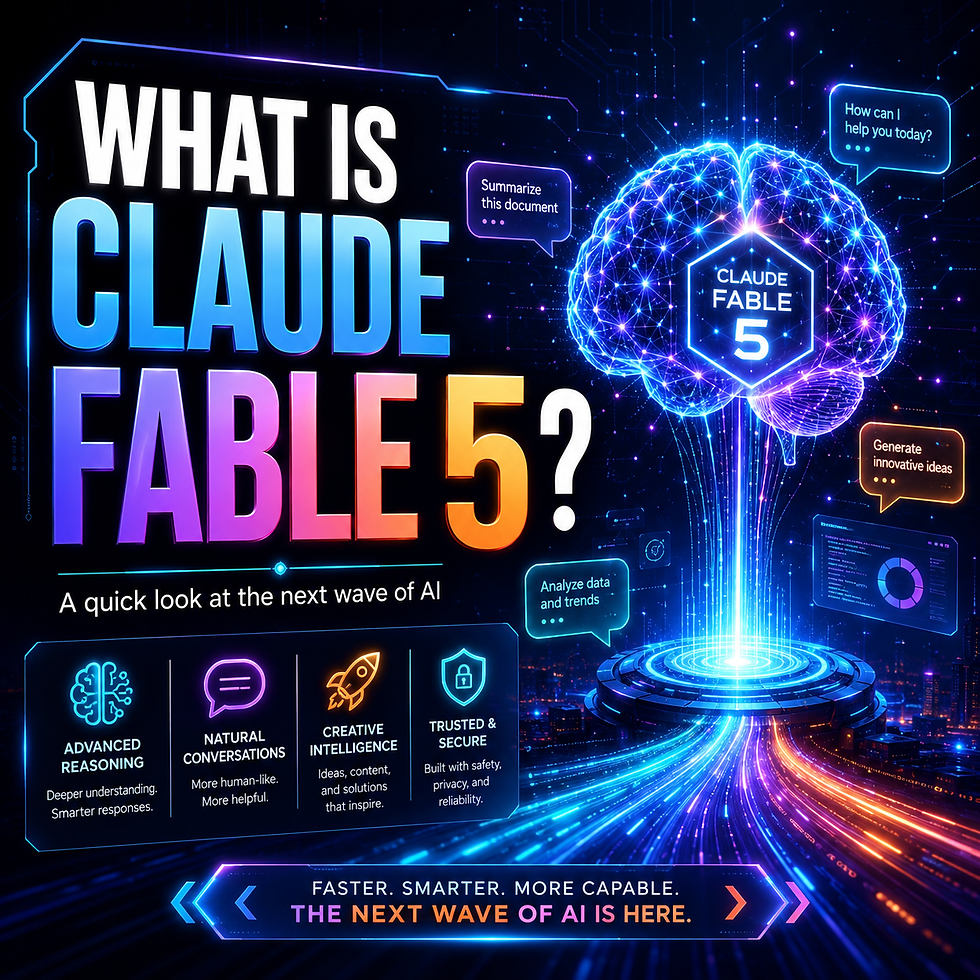
June 9, 2026 | Anthropic introduced Claude Fable 5 and the restricted-access Claude Mythos 5, marking another major capability step. |
June 12, 2026 | Anthropic temporarily suspended Fable 5 and Mythos 5 availability after U.S. export controls were applied. |
July 1, 2026 | Anthropic restored Fable 5 and Mythos 5 access after those export restrictions were lifted. |
June 30, 2026 | Claude Sonnet 5 launched with stronger reasoning, coding, tool use, knowledge work and autonomous agent capabilities. |
July 24, 2026 | Claude Opus 5 launched and became an important model for advanced professional work, coding and agents. |
September 1, 2026 | Anthropic introduced Claude Fable 5.1 and Mythos 5.1, positioning them as its most advanced models for coding and knowledge work at launch. |
September 22, 2026 | Claude Opus 5.5 launched as the first member of the Claude 5.5 family, with improvements in professional work, agents, efficiency and coding. |
September 28, 2026 | Claude Sonnet 5.5 launched as a faster and lower-cost complement to Opus 5.5. Anthropic said Claude Haiku 5.5 would follow. |
This progression illustrates a broader change in generative AI. Claude evolved from answering prompts into a system that can potentially reason, research, create, connect to data, use tools and execute multi-step workflows.
What Are the Latest Claude Models in 2026?
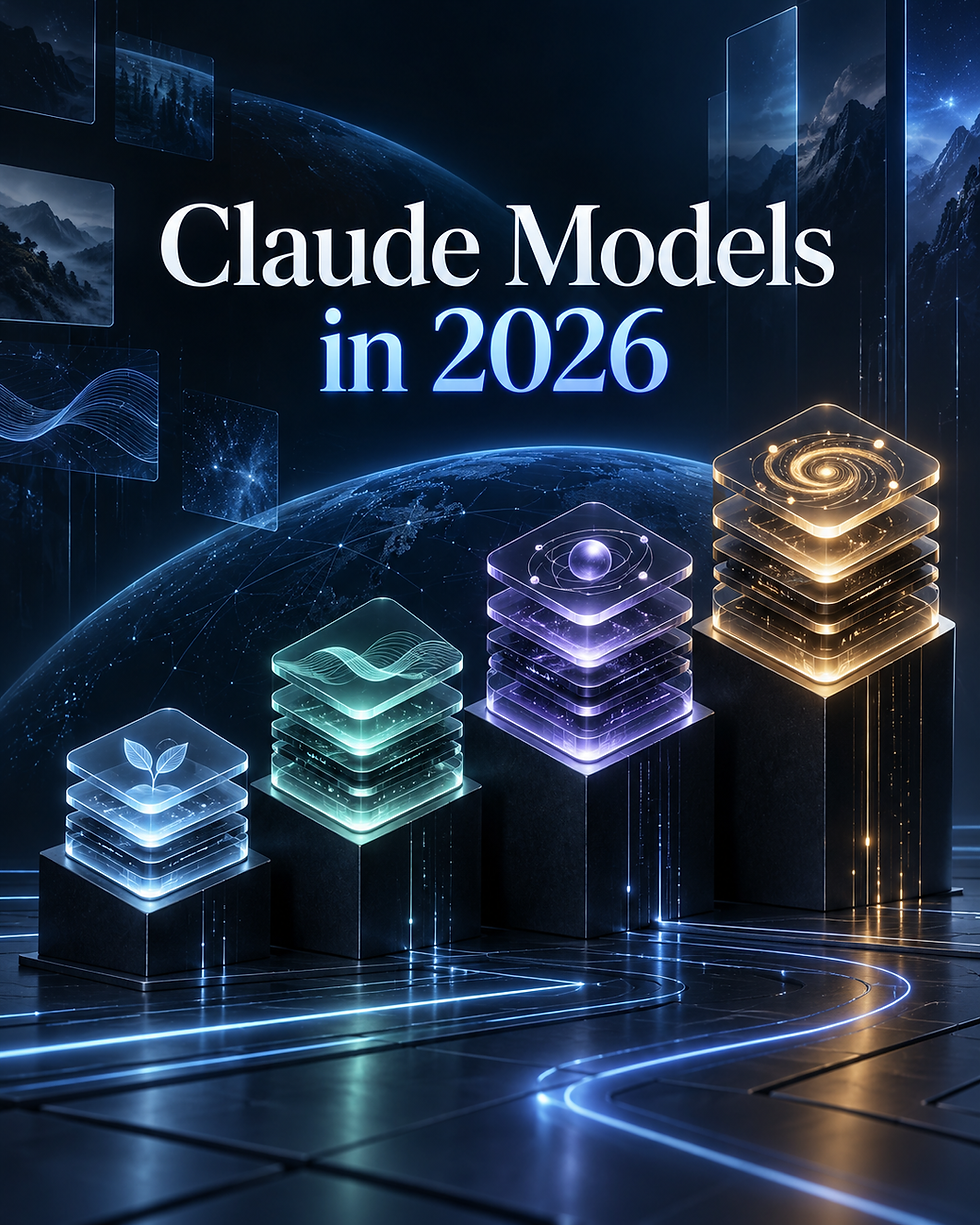
As of October 2, 2026, Anthropic's current developer documentation lists a model lineup that includes Claude Fable 5.1, Claude Opus 5.5, Claude Sonnet 5.5 and Claude Haiku 4.5.
Model | Positioning | Context Window | API Input / Output Pricing per 1M Tokens* |
Claude Fable 5.1 | Demanding reasoning and long-horizon agentic work | 1M | $10 / $50 |
Claude Opus 5.5 | Advanced agentic coding and professional knowledge work | 1M | $4 / $20 |
Claude Sonnet 5.5 | Balance of intelligence, speed and cost | 1M | $2 / $10 |
Claude Haiku 4.5 | High-speed, cost-sensitive workloads | 200K | $1 / $5 |
Pricing and product availability can change. Always verify current commercial terms directly with Anthropic before making procurement or architecture decisions.
Anthropic announced on September 28, 2026 that Haiku 5.5 is planned to join the 5.5 family, so organisations should check Anthropic's latest documentation rather than assuming the model table above will remain unchanged.
Claude Haiku, Sonnet, Opus and Fable: What Is the Difference?
The names broadly represent different capability and efficiency profiles rather than completely separate products.
Haiku has traditionally focused on speed and lower-cost workloads.
Sonnet has generally targeted a balance between capability, latency and cost.
Opus is positioned for more complex work where stronger reasoning, coding and agent capabilities are valuable.
Fable, introduced in 2026, represents Anthropic's higher frontier tier for demanding reasoning and long-horizon work. Anthropic has also developed Mythos models with different safeguards and restricted access for certain advanced research use cases.
The correct model therefore depends on the workload. Using the largest model for every task can unnecessarily increase cost and latency.
What Can Claude AI Do?
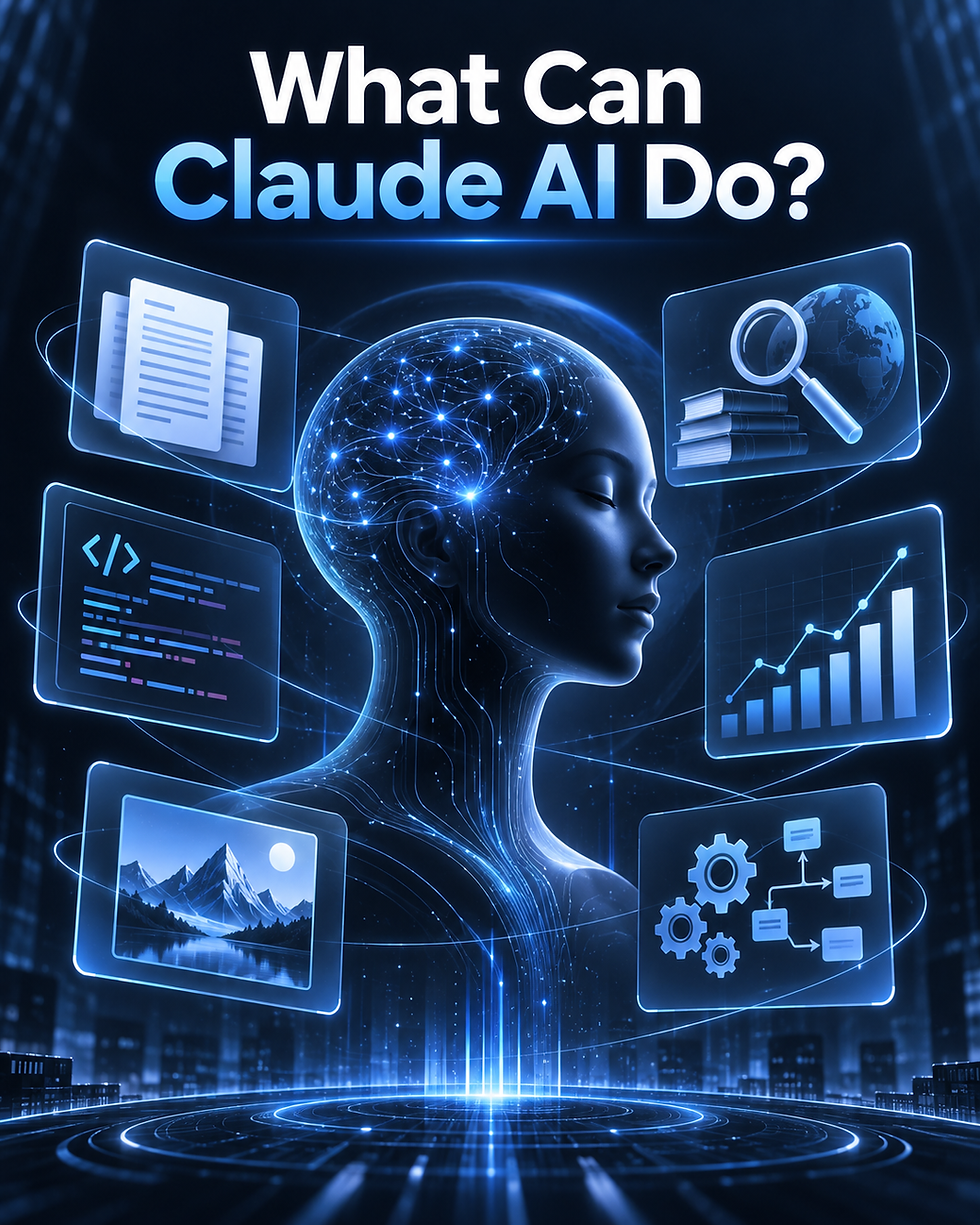
Claude's capabilities now cover a broad spectrum of professional and personal tasks.
Area | Example Claude Use Cases |
Writing | Draft reports, articles, proposals, emails and documentation |
Research | Search sources, synthesise information and build research reports |
Coding | Write, understand, test, refactor and debug software |
Data analysis | Interpret tables, documents, datasets and business information |
Document analysis | Review long reports, policies, contracts and research papers |
Image understanding | Interpret screenshots, charts, graphics and other visual inputs |
Education | Explain concepts, generate examples and support personalised learning |
Finance | Assist with research, modelling, document analysis and scenario exploration |
Marketing | Research audiences, develop campaigns, analyse content and create drafts |
HR | Develop training material, job descriptions, policy drafts and workforce analysis |
Operations | Analyse SOPs, workflows and operational documents |
Software agents | Plan and execute multi-step development tasks |
Knowledge management | Work with authorised organisational data and project-specific context |
Design | Assist with prototypes, visual work, presentations and documents |
Automation | Use authorised tools and integrations as part of multi-step workflows |
These are assistance capabilities, not guarantees of correctness.

Claude Code: From AI Coding Assistant to Coding Agent
One of Claude's most consequential product developments has been Claude Code.
Claude Code was introduced alongside Claude 3.7 Sonnet on February 24, 2025 as a command-line research preview for agentic coding. It allowed developers to delegate more substantial engineering tasks directly from their terminal.
Claude Code subsequently became much more capable.
Rather than merely suggesting a line of code, agentic coding systems can inspect codebases, identify files, plan changes, edit code, execute commands, test results and iterate through a task.
This illustrates the difference between generative AI and agentic AI.
Generative AI primarily produces a response.
Agentic AI can potentially decide which steps are necessary, use appropriate tools, perform those steps, inspect the results and continue toward a goal.
Human oversight remains important, particularly where code affects security, infrastructure, financial systems or production environments.
What Are Claude Artifacts?
Artifacts were introduced with Claude 3.5 Sonnet in June 2024.
Instead of placing everything inside a normal chat response, Claude can create substantial standalone outputs in a separate workspace. Examples can include documents, code, visualisations, interactive tools and other reusable material.
Anthropic currently describes Artifacts as a way to turn ideas into shareable apps, tools or content that users can edit and iterate on.
This was an important product shift because Claude became not just an answer generator, but an environment for creating and refining deliverables.
What Are Claude Projects?
Projects allow users to group conversations and provide relevant information for a particular area of work.
Anthropic introduced Projects in June 2024 to allow users to place chats and project knowledge together, helping Claude work with relevant organisational or project context rather than beginning every discussion without that background.
Examples might include a marketing project containing brand guidelines, a consulting project containing research documents or a software project containing technical documentation.

What Is MCP in Claude?
MCP stands for Model Context Protocol.
Anthropic introduced MCP in November 2024 as an open standard designed to connect AI applications with external tools and data.
The problem MCP attempts to address is straightforward.
An AI model by itself does not automatically have access to every database, document repository, enterprise system or productivity application. Historically, developers had to create separate custom integrations for different services.
MCP provides a standardised mechanism through which compatible AI applications can connect to supported external systems.
This has important implications for enterprise AI because the useful future of generative AI is not simply "ask an AI a question." It increasingly involves enabling authorised AI systems to work with the same information and applications employees use.
Anthropic later expanded this model through Claude Integrations.
Does Claude Have Internet Access?
Claude can access current web information when web search is available and enabled.
Anthropic introduced Claude web search in March 2025 and subsequently expanded the functionality globally. When information is obtained from web search, Claude can provide citations to supporting sources.
Anthropic also introduced web-search capabilities for developers through its API in May 2025.
This distinction is important because the knowledge contained within an AI model and information retrieved live from the web are not the same thing.
For current prices, laws, news, financial information, product specifications, policies or recent events, live information should generally be verified from appropriate authoritative sources.
Claude Research and Google Workspace
Claude's Research capability pushed the product further toward autonomous information gathering.
Anthropic describes Research as an agentic capability that can perform multiple searches, investigate different aspects of a question and assemble a cited report.
In April 2025, Anthropic also announced Google Workspace integration for supported users, allowing Claude, when properly authorised, to work with information from Gmail, Calendar and Docs.
For organisations, this changes the productivity model.
Instead of copying information manually into an AI prompt, connected AI systems can potentially search authorised business information and combine relevant material across different sources.
Access permissions, governance and confidentiality controls therefore become increasingly important.
Can Claude Use a Computer?
Anthropic began publicly experimenting with computer use in October 2024.
Through an appropriate developer implementation, Claude could look at screenshots, move a cursor, click interface elements and enter text into software.
The significance of computer use is that an AI system does not necessarily need a dedicated API integration for every application. In some scenarios, it can interact with software through its graphical interface in a way conceptually similar to a human user.
Computer-use systems also introduce additional risk. An AI agent could misunderstand a page, click the wrong control, act on misleading content or encounter prompt-injection attacks.
High-impact actions should therefore include appropriate permissions, review processes and human confirmation.

Why Businesses Are Paying Attention to Claude
Claude's business relevance comes from the combination of reasoning, long context, enterprise information, tools and agent capabilities.
A professional could potentially move from:
"Summarise this report"
to:
"Analyse these reports, compare the findings with recent market information, identify inconsistencies, build a management summary and prepare a presentation."
The second task involves several forms of work rather than one text-generation request.
This progression is why organisations increasingly need to think about AI in terms of workflow redesign, not merely prompt writing.
Effective enterprise adoption requires appropriate use-case selection, data governance, verification standards, employee training and clarity regarding which decisions remain human responsibilities.
Claude for Marketing
Marketing teams can use Claude to support customer research, campaign ideation, content planning, audience analysis, competitive research, ad-copy variations, SEO research, document analysis and campaign reporting.
Its value becomes greater when good source material is supplied.
For example, a prompt that includes actual campaign performance data, brand guidelines, customer research, approved product facts and a clearly defined objective is generally much more useful than asking:
"Create a marketing campaign."
The underlying lesson applies across departments: better context usually produces better AI-assisted work.
Claude for HR
Human-resource teams can use Claude for training material, employee communications, interview-question development, job-description analysis, competency frameworks, policy summarisation and learning programmes.
However, AI output should not automatically determine hiring, firing, promotion, compensation or other consequential employment decisions.
Human review remains necessary, particularly where bias, law, policy or employee rights may be involved.
Claude for Finance and Accounting
Potential use cases include document review, management-report drafting, variance explanations, scenario analysis, spreadsheet assistance, research and financial-document summarisation.
Claude Opus 5.5 and the modern Claude family have been designed in part around professional knowledge work, but AI-generated calculations and conclusions should still be reconciled against authoritative records and reviewed by qualified professionals where material decisions are involved.
Claude for Research
Research is one of the strongest conceptual applications for modern AI systems because Claude can combine document analysis, long context, web information and citations.
A useful research workflow should nevertheless distinguish between:
Source retrieval → evidence evaluation → synthesis → conclusions.
An AI-generated citation does not automatically prove that the interpretation drawn from it is correct.
Researchers should open critical sources, review the primary evidence and independently verify consequential claims.
Claude for Coding and Software Development
Coding has become one of Claude's most prominent capability areas.
Claude can assist with explaining unfamiliar code, debugging, building functions, generating tests, reviewing pull requests, refactoring code and working across larger codebases.
More agentic implementations such as Claude Code can undertake multi-step engineering work.
The appropriate operating model is therefore moving from AI autocomplete toward AI-assisted software engineering, while still requiring testing, security review and responsible deployment.
Claude for Education and Learning
Claude can act as a conversational learning assistant by explaining difficult ideas, creating examples, generating practice questions, comparing concepts and adapting explanations to different levels of knowledge.
It can also analyse documents and images supplied by learners.
Students should still verify factual information and comply with their institution's academic-integrity policies.
Using AI to understand a concept is fundamentally different from submitting AI-generated work as one's own when that is prohibited.
What Makes Claude Different?
It is better to discuss concrete design characteristics than claim that one AI product is universally "best."
Claude has become particularly associated with several areas:
Characteristic | Why It Matters |
Long context | Useful for large documents and extensive working material |
Coding | Major investment in software-development and agentic coding capabilities |
Constitutional approach | Explicit principles influence training and model behaviour |
Artifacts | Turns conversations into editable and reusable outputs |
Projects | Provides organised project-specific context |
MCP | Connects AI applications with external tools and information |
Research | Supports multi-step information gathering and cited synthesis |
Computer use | Enables experimental interaction with graphical software |
Enterprise capabilities | Supports organisational use cases, administration and integrations |
Agentic workflows | Moves beyond answering toward planning and execution |
Which AI system is most appropriate depends on the specific workload, cost, ecosystem, integration requirements, governance standards and performance on the organisation's own evaluations.
Is Claude Always Accurate?
No.
Claude is an advanced AI system, but it can still generate incorrect information, misunderstand instructions, omit context, produce weak reasoning or present uncertain information confidently.
This phenomenon is commonly referred to as hallucination in generative AI.
Web search can improve freshness and grounding, but it does not eliminate every possible error.
The safest professional approach is:
AI generates or analyses → human verifies → authoritative evidence confirms → action is taken.
This is particularly important in healthcare, finance, legal work, cybersecurity, engineering, HR and other consequential areas.
Is Claude Safe to Use With Company Data?
That depends on the product configuration, organisation's policies, contractual terms and nature of the data.
Anthropic offers enterprise-oriented capabilities that include administrative and security controls. However, an organisation should still define what employees may upload or connect, which information is confidential, what retention requirements apply and which actions AI agents are authorised to perform.
Never assume that simply because an AI product offers enterprise functionality, every category of internal information should automatically be shared with it.
AI governance must remain an organisational responsibility.

What Is the Future of Claude?
Claude's historical direction is clear.
The progression has been roughly:
Chat → long context → multimodality → projects → artifacts → tools → computer use → MCP → reasoning → research → coding agents → connected enterprise workflows → increasingly autonomous agents.
That trajectory suggests the central question for organisations is changing.
In 2023, companies were asking:
"What can a chatbot write for us?"
In 2026, the more important question is:
"Which parts of our workflow can humans and AI systems perform together, and what controls are required?"
That shift affects training, organisational design, software procurement, security, data governance, management and workforce development.
How to Use Claude More Effectively
Good Claude results depend heavily on the quality of instructions and context.
A weak instruction might say:
"Analyse this document."
A stronger instruction would explain the role Claude should take, objective, source material, intended audience, criteria, constraints, output structure and verification requirements.
For example:
"Act as a financial-analysis assistant. Review the attached quarterly management report for Q2 FY2026. Identify revenue variance, EBITDA variance, cash-flow concerns and the five largest deviations from budget. Use only figures contained in the supplied report. Present each finding with the relevant page or table reference. Separate verified facts from interpretation. Flag any figure you cannot reconcile rather than estimating it. Finish with five questions management should investigate before the monthly review."
The second version is more useful because Claude knows the role, task, context, constraints, evidence requirements and expected output.

Frequently Asked Questions About Claude AI
What is Claude AI in simple words?
Claude is an artificial intelligence system developed by Anthropic that can understand instructions and help users work with text, documents, images, code, research and connected tools.
Who owns Claude AI?
Claude is developed by Anthropic, a Public Benefit Corporation focused on AI research and products.
When was Claude launched?
Anthropic publicly introduced Claude on March 14, 2023.
What is the latest Claude model?
As of October 2, 2026, Anthropic's latest broadly announced 5.5 releases include Claude Opus 5.5, released September 22, and Claude Sonnet 5.5, released September 28. Fable 5.1 is also part of Anthropic's current high-capability lineup.
What is Claude Sonnet?
Sonnet is a Claude model tier designed around a balance of capability, speed and cost. The current Sonnet 5.5 model was released on September 28, 2026.
What is Claude Opus?
Opus is a higher-capability Claude tier intended for complex coding, agents and professional knowledge work. Claude Opus 5.5 was introduced on September 22, 2026.
What is Claude Haiku?
Haiku is Claude's speed and cost-oriented model tier. Anthropic has stated that Haiku 5.5 is planned to join the Claude 5.5 family.
What is Claude Fable?
Fable is a newer high-capability Claude tier introduced in 2026 for demanding reasoning and long-horizon work. Anthropic released Fable 5.1 in September 2026.
Can Claude search Google or the internet?
Claude can search information on the web where its web-search functionality is available and enabled. It can return citations with information retrieved from those searches.
Can Claude read PDFs and documents?
Claude can analyse documents supplied within supported Claude products and workflows. The amount of information it can process depends on the model, product and context limits.
Can Claude understand images?
Current Claude models support vision and can analyse visual inputs such as images, screenshots, diagrams and charts.
Can Claude make mistakes?
Yes. Claude can produce incorrect or incomplete information. Important claims, calculations and decisions should be independently verified.
Is Claude an AI agent?
Claude is a model and product family rather than a single fixed "agent." However, Claude models can power agentic systems that plan tasks, use tools and perform multi-step workflows.
What is Claude Code?
Claude Code is Anthropic's agentic coding environment for software-development work. It originated as a research preview alongside Claude 3.7 Sonnet in February 2025.
What is Claude MCP?
MCP, or Model Context Protocol, is an open protocol introduced by Anthropic for connecting AI applications to external tools and data sources.
Why Claude Matters in the Generative AI Era
Claude's history demonstrates how quickly generative AI is evolving.
In less than four years, Claude progressed from an AI assistant focused mainly on text-based conversations into an ecosystem involving long-context models, vision, research, web search, business integrations, coding agents, MCP, computer interaction, Artifacts, Projects and increasingly sophisticated agentic workflows.
The biggest opportunity is therefore not simply writing more prompts.
It is learning how to redesign work around a combination of:
human judgment + reliable information + AI reasoning + appropriate tools + verification + governance.
Companies that understand that distinction are likely to extract considerably more value from AI than organisations that treat Claude or any other generative AI platform merely as a faster content-writing tool.
Final Thoughts
So, what is Claude AI?
Claude is Anthropic's family of artificial intelligence models, applications and agentic technologies designed to help people reason, research, create, analyse, code and work with digital tools and information.
It started publicly in March 2023 as an AI assistant.
It evolved through Claude 2, Claude 3, the 3.5 and 3.7 generations, Claude 4, the 4.x series, Claude 5, Fable 5 and, most recently, the Claude 5.5 generation.
Its evolution reflects the broader transformation of generative AI itself, from systems that primarily generate answers toward systems capable of working through complex tasks with people.
The technology remains imperfect, and human verification remains essential. But Claude's rapid development makes it one of the important platforms to understand for professionals, developers and organisations preparing for an increasingly AI-assisted workplace.
Editorial and Source Transparency
This article was researched using official Anthropic announcements, Claude Platform documentation, Anthropic's published Constitution and official Google Search Central documentation. Model specifications, prices, product availability and AI capabilities can change rapidly. Readers should verify time-sensitive product information against the latest official documentation.
The article is structured for human readability and search discoverability. It intentionally avoids keyword stuffing, mass-produced search variations and unsupported claims.
Google's 2026 guidance emphasises valuable, unique, non-commodity, people-first content rather than creating pages primarily for ranking manipulation. Google also states that the same fundamental SEO principles apply to AI Overviews and AI Mode and that no special AEO or GEO markup is required.
Google's spam policies specifically identify large-scale generation of low-value or unoriginal pages primarily intended to manipulate rankings as scaled content abuse, regardless of whether AI or another method created the pages.
For implementation, the publisher should use accurate Article or BlogPosting structured data with the genuine author, datePublished, dateModified and appropriate author profile URL. Google recommends clear author information for article markup.
Disclaimer: Information published on this website is for educational and informational purposes only. Parikshit Khanna, his team, and Digital Training Jet Pvt. Ltd. make no guarantees regarding its completeness, accuracy, or applicability and shall not be liable for any direct or indirect loss, damage, decision, or consequence arising from its use.


Comments